Soundness You Can trust: From The Schooling Ring To The Grand Prix Ring
Schedule a performance-focused gait assessment

Our vet in Monroe, NC come directly to your barn with advanced diagnostics and board-certified expertise to find out exactly what’s going on. Most horses that are off their game don’t have an obvious injury, they have a problem that shows up in their work, like a resistance to one direction or a subtle shift in how they carry themselves. Dr. Thaler has spent over 40 years working through these kinds of cases, and he brings that depth directly to you.

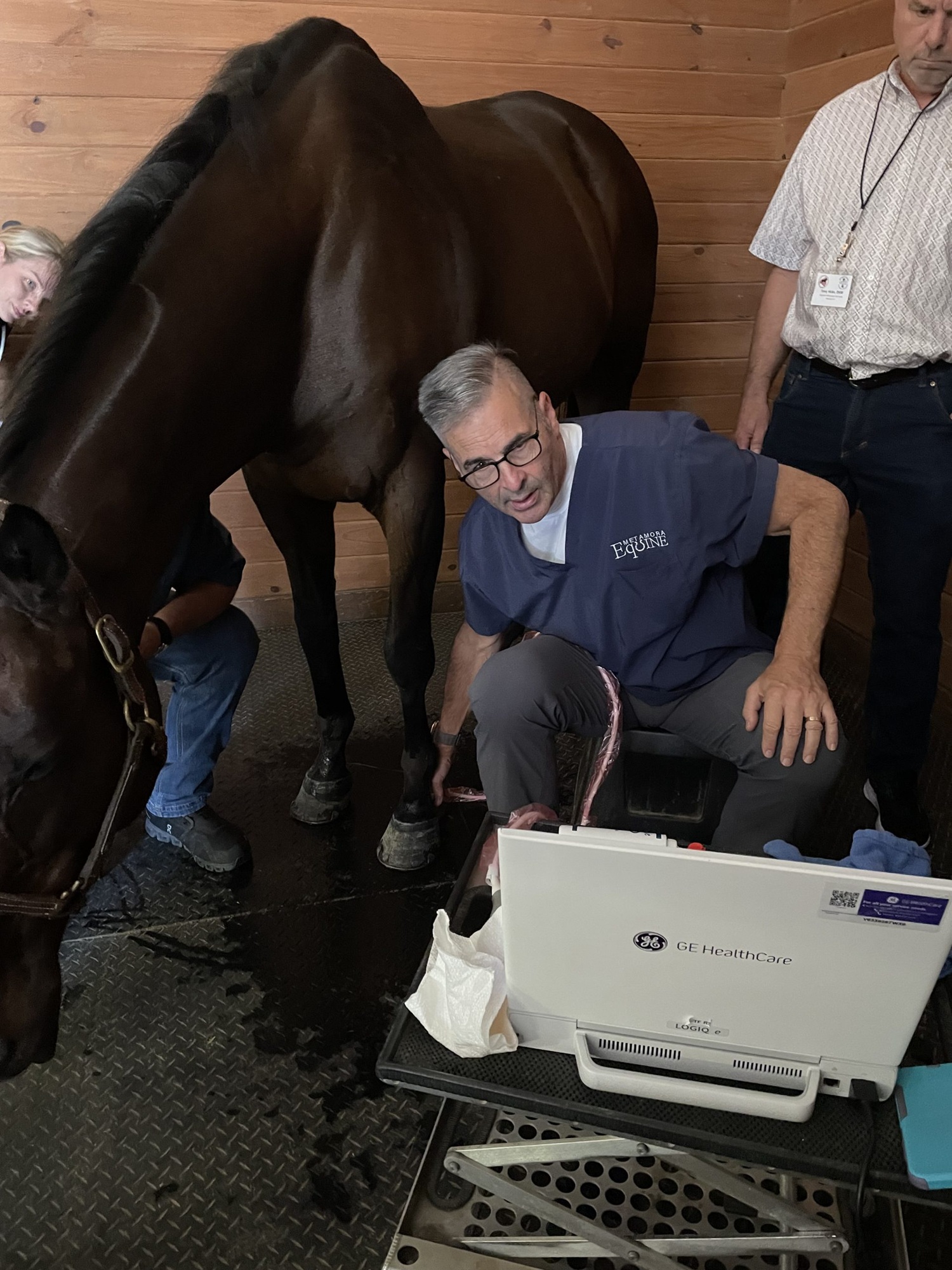
Metamora Equine delivers advanced, performance-focused veterinary care for competition horses, led by Dr. Thaler’s board-certified expertise in equine sports medicine. Every service supports accurate diagnosis, long-term athletic success, and thoughtful treatment.
We provide exceptional care for your equine athlete. Metamora Equine brings evidence-based medical solutions to the stall. We leverage technology and 40 years of experience to deliver health care to your horse.
Comprehensive care: working with your trainer, your farrier and you to provide the optimum performance management for your horse.
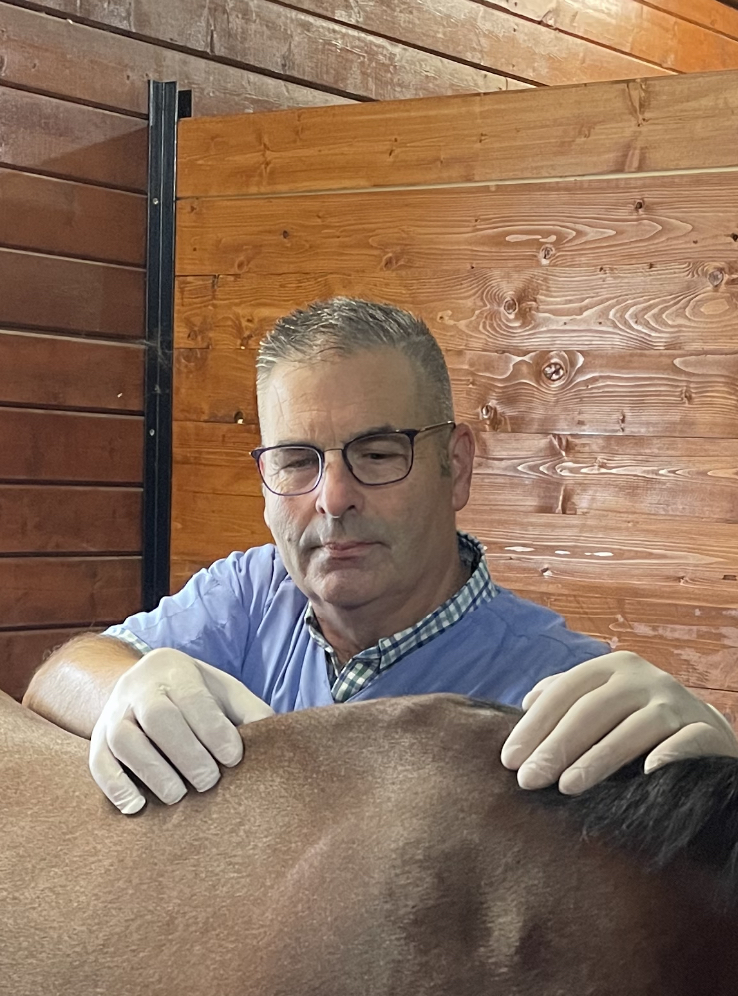
There are not many equine vets in the country who hold board certification through the American College of Veterinary Sports Medicine and Rehabilitation, Fellowship in the College of Animal Chiropractors, and certification with the International Society of Equine Locomotor Pathologists at the same time. Dr. Thaler, VMD DACVSMR, holds all three, and he has spent more than 40 years putting that training to work in the field. He founded Metamora Equine in 1999, and the practice has grown steadily because the quality care and results speak for themselves. Dr. Thaler does not work from a clinic. He comes to your barn, brings the equipment, and does the evaluation where your horse actually performs. That means better diagnostic data, less stress on the horse, and a faster path to answers.
Getting a clear lameness diagnosis on a performance horse requires more than watching the horse trot a straight line. Dr. Thaler’s evaluation process uses advanced diagnostics, on-site imaging, and targeted nerve blocks to build a complete picture of where the pain is coming from and how it’s affecting your horse’s movement.
Some of the most frustrating lameness cases in sport horses are the ones that look fine on a basic exam. The horse trots out without obvious issues, but something is clearly off under saddle. These cases don’t resolve with rest and bute, and they don’t respond to treatment aimed at the wrong location.
If your horse moves differently depending on the footing, the rider, or the direction of travel, that inconsistency is worth investigating. Horses showing one-sided stiffness, shortened stride on a particular lead, or reluctance through lateral work are good candidates for a full evaluation. So are horses coming back from injury who haven’t quite found their old way of going, and horses that are sound at the trot but not right at the canter. Pre-purchase buyers whose horse is heading into a serious training program should also consider this level of evaluation before committing.
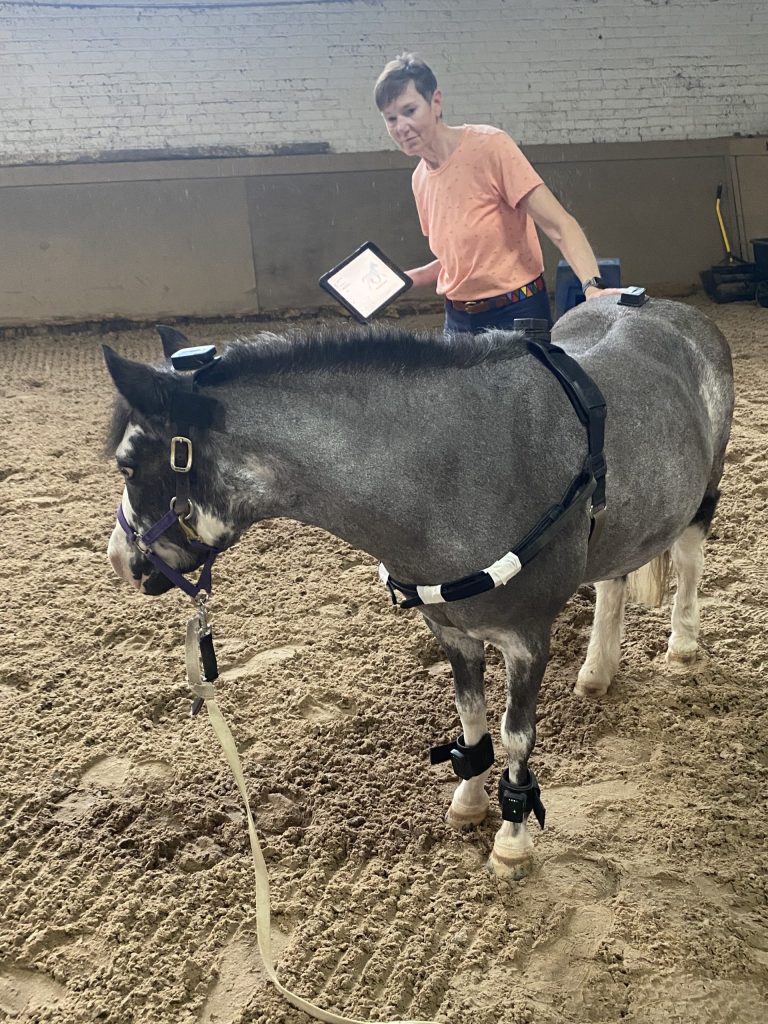
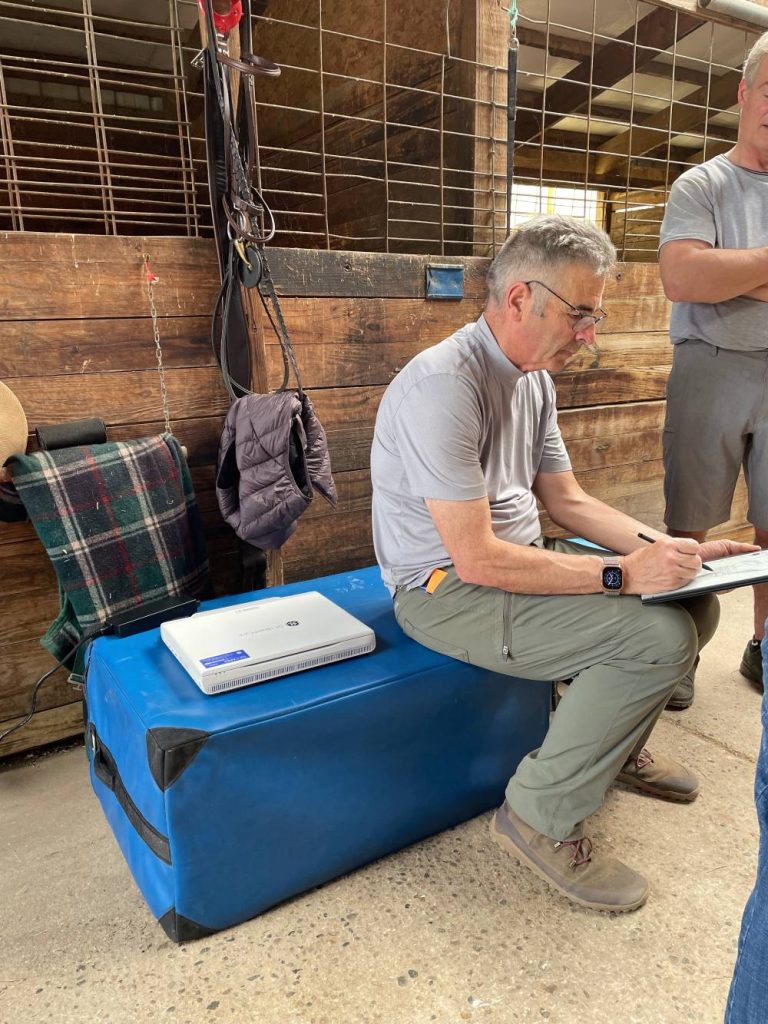
Dr. Thaler starts with a full movement evaluation using the Arioneo Vet Equisym System, which tracks biomechanical data that no human observer can reliably detect. On-site digital X-rays and ultrasound let us image structures without putting your horse through the stress of trailering to a facility. When we need to localize pain precisely, we use targeted nerve blocks, working through the limb or region methodically until we know exactly where the problem lives. Every finding gets documented with images and written detail so your farrier, trainer, and primary vet all have something concrete to work from.
A thorough lameness evaluation gives everyone on your care team a shared starting point. Your farrier can address loading patterns with real data behind the shoeing decisions. Your trainer knows which movements to ease back on and when it is safe to push again. Follow-up evaluations use the objective baseline we establish now to measure whether the horse is genuinely improving or just appearing to.
Do not wait for a horse to be clearly three-legged before scheduling an evaluation. Changes in way of going, even small ones, are worth looking at early. Any horse entering serious training, any horse coming back from time off, and any horse being purchased for competition use should have this level of evaluation. If your instinct as a rider or trainer says something has changed, that instinct is usually right.
Riders and trainers often know something is wrong before any vet confirms it. The problem is that standard lameness exams rely heavily on what the examiner can observe with the naked eye, and that observer agreement is lower than most people assume. A PLOS ONE study found that among 70 equine professionals evaluating horse movement, “inter-rater agreement was very poor” across all parameters, with no meaningful correlation between visual scores and quantitative gait analysis. Two experienced vets watching the same horse often reach different conclusions, and both may miss what an inertial sensor captures. Dr. Thaler’s approach replaces subjective impressions with data, then works through the diagnostic process step by step until the source of pain is confirmed.
A horse that is not quite sound does not simply stay not quite sound. It adapts, and those adaptations cause their own damage. A 2025 retrospective study of 235 clinically lame horses found that secondary lameness developed in another limb in 56.3% of lameness cases. More than half of horses with a primary lameness problem end up with a second one as the body compensates. Some horses reach a point where surgical care or emergency care becomes part of the picture, and many never return to their previous level of performance once soft tissue, joint, or bone structures are significantly involved.
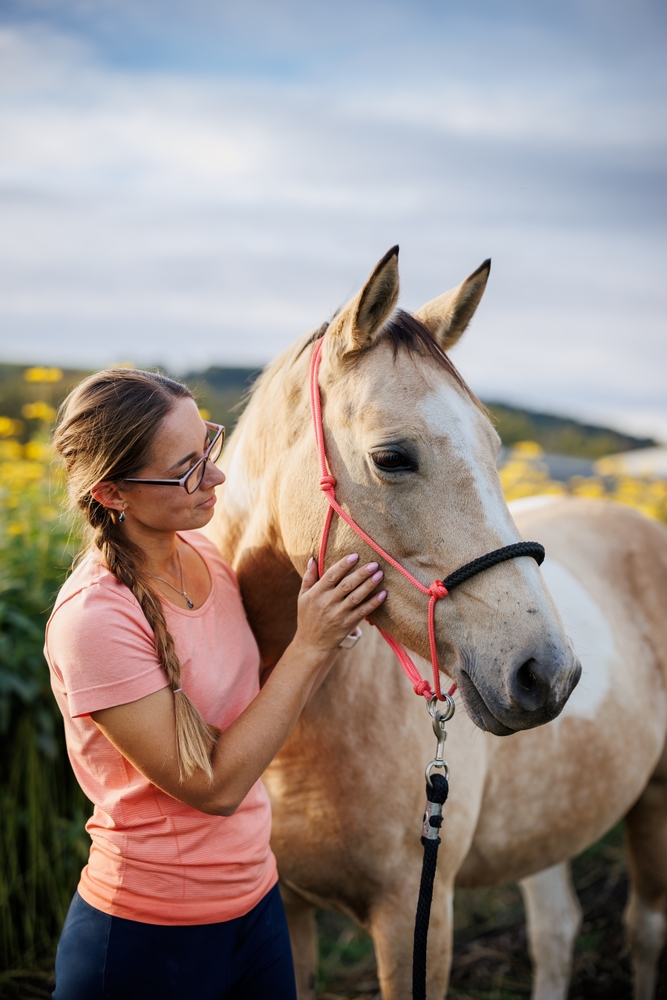

A horse that is not performing at its ability is telling you something, but the message is not always easy to read. Dr. Thaler’s poor performance assessment goes beyond the obvious to find the physical reasons a horse is holding back, whether those reasons show up clearly on an exam or not.
When a horse that used to be willing starts saying no, the instinct is often to push through it or adjust the training. That works when the issue is training. When the issue is pain, it makes things worse.
Competition horses do not get the benefit of telling you when something is accumulating. Sports medicine is the discipline built around monitoring athletic horses closely enough that problems get identified before they become injuries, and Dr. Thaler has spent his career doing exactly that.
Most veterinary care is reactive. General wellness exams and routine check-ins address obvious health needs, but they aren’t designed to track the cumulative physical load a competition horse carries through a full season. For horses training and competing at a high level, that gap comes with a cost.
Any horse training or competing consistently in a demanding discipline is a candidate for ongoing sports medicine support. Hunters, jumpers, dressage horses, and eventers all put repetitive stress on specific structures, and that stress adds up differently for each horse and each program. Young horses entering real training are an especially good fit for early sports medicine involvement, since establishing good baseline data and catching asymmetries early makes a lasting difference. Horses with any history of performance-related injury also benefit from regular monitoring to stay ahead of recurrence.
Sports medicine care at Metamora Equine includes regular movement monitoring, muscle assessment, targeted diagnostics between competition cycles, and spinal manipulative therapy to maintain alignment and range of motion. Dr. Thaler works with your training calendar to time evaluations around the demands of your horse’s season, so the information we gather is as relevant as possible to what you are actually asking of the horse. Preventive imaging can be used to check structures that are under load before anything becomes symptomatic.
Sports medicine sits at the center of a complete athletic care program. It is not a replacement for your trainer, farrier, or primary vet. It is what ties all of them together with consistent, objective data about how the horse is holding up. Dr. Thaler’s evaluations generate findings that every member of your care team can use, giving everyone the same picture of where the horse is and what it needs.
Before something goes wrong is the right time. Pre-season evaluations establish a baseline for each horse so that any changes during the competition period are measured against something real. Mid-season check-ins catch the kinds of subtle shifts that trainers feel but cannot always name. Post-season assessments let horses recover properly and go into the next year without carrying anything that should have been addressed.
The gap between a horse that looks fine and a horse that is fine is often significant. Standard veterinary care closes that gap only when something is obvious enough to catch on a routine exam. Research published in the peer-reviewed journal Animals found that musculoskeletal injury is one of the leading reasons competition horses have shortened careers, and that “proactive integration of care by health professionals could provide a mechanism to attenuate injury risk,” which is precisely what a consistent sports medicine relationship provides. Dr. Thaler’s board certification in sports medicine means the quality care he delivers is focused on athletic function, movement quality, and early detection at a level that falls outside the scope of general equine practice.
The injuries that end competition careers tend to look sudden from the outside but are rarely sudden on the inside. A 2024 JAVMA study documented that “the processes leading to catastrophic injuries are often developing for months prior to the terminal event,” with the majority of affected horses showing preexisting pathology at the injury site that had not been detected. These horses were cleared to compete. The damage was there. It just was not found. Regular sports medicine monitoring exists to find exactly this kind of subclinical change before it reaches a tipping point.

40+ years of experience. National reputation. Proven clinical and business leadership.



Metamora has really great imaging that they bring right to us. It allows them to follow every lead to fruition. No waiting and no guessing. They also take a very methodical approach to every exam. It’s a process, like building a puzzle, so using diagnostics and technology to collect data reveals another part of the puzzle.
Sarah Ash, Trainer, True Course Farm
Doctor Thaler is incredible at diagnostics. He has the tools, the training, and the experience to solve challenges that other vets really could not. Figuring out lameness can be very subjective. Dr. Thaler uses technology to look for answers and tell him things that the rider can’t, that the horse can’t.
Cindy Petherbridge, Trainer, Huntsover Farms
With Metamora, the horse comes first. They bring urgency and care to every visit. They’re good with the horses – even difficult ones – and then they take the time to talk to the owner or the rider.
The technology has always been the thing that impressed us. Doctor Thaler has the science that backs it up. He has the tools and the techniques, and he’s done the studies and read the latest news. When he makes a suggestion, there are facts behind it, not a guess. He gives you the best of all the options available for whatever we are dealing with.
Rhonda Wille, Owner
It’s easy for vets who see hundreds of horses to quickly turn to solutions that have worked for them before. In contrast, Dr. Thaler is always gaining new knowledge. He has the most modern and best diagnostic equipment, and so he suggests new perspectives and ideas. That’s important to being successful in diagnosing injuries and problems.
For clients serious about performance, Metamora is my go-to. Dr. Thaler is the top sports veterinarian and a partner and resource for diagnosing lameness and other problems, as well as suggesting therapeutic solutions.
Garth Short, Owner, Horseshoeing Incorporated
The communication from Metamora is key. I am always contacting them first with my questions. They’re ability to answer the call and provide service to clients is unmatched, even if that means going the extra mile to accommodate.
Leah Smaller, Professional Rider and Trainer
Doctor Thaler has a problem-solving mindset. There’s no one better at finding an issue. He uses technology and experience to understand the issue.
Jaafar Reza, Trainer, Gross Point Equestrian
There are many different therapeutic applications that promote healing. Dr. Thaler comes in with the science. He’ll study the X-rays and do the diagnostics, then I’ll do the farrier work. We’ve brought horses back from lameness and saved horses that otherwise would be done. He’s 100% onboard to get the horse through it.
This practice defines excellence
Dana Wille, Head Trainer, Equine Odyssey
Sometimes I walk into a barn and know Metamora’s been there because there is a picture drawn of a horse’s leg showing where this injury was. Dr. Thaler is great at explaining complex things very simply.

Our vet in Monroe, NC serves the Monroe community and surrounding areas with everything from first-time lameness evaluations to season-long sports medicine programs, coming directly to your barn each time. If you are ready to get a clearer picture of what your horse needs, reach out to 248.310.5568 to schedule an appointment.
New clients often have questions about how Metamora Equine works before booking their first appointment. Here is what you should know.
Call us or use the request form on our website. Bonnie Thaler manages our scheduling and will get back to you to go over timing, travel availability in your area, and what to plan for your appointment. Because Dr. Thaler travels to clients rather than seeing patients at a fixed clinic, we work through scheduling carefully to make sure we can get to you when you need us. Non-emergency appointments book up, so reaching out ahead of time works in your favor.
Expect to spend time talking through your horse’s history before we start the physical evaluation. Dr. Thaler wants to understand what you have been noticing, what has been tried, and what your goals are before he begins. Unlike general wellness exams that follow a standard checklist, everything here is built around what your specific horse needs. Most first visits include gait analysis, and imaging or nerve blocks may be part of the evaluation depending on what we find. Before we leave your facility, we go over the findings in plain terms and make sure you know what the next steps are.
Our primary focus is scheduled sports medicine and lameness evaluations, but genuine urgency gets our attention. If your horse has an acute lameness issue that cannot wait, call us directly and we will figure out what is possible given our schedule and location. For situations that require immediate emergency care, your nearest equine emergency hospital should be your first call, and we are happy to stay in contact and coordinate from our end.
Dr. Thaler is licensed in Michigan, Ohio, North Carolina, and South Carolina, and the practice travels regularly to barns and competition venues across all four states. Our base is in Davisburg, Michigan, and we work throughout the Detroit area as well as Columbus and Wilmington, Ohio, and throughout North and South Carolina serving the Monroe community and beyond. If you are not sure whether we come to your area, contact us and we can check.
A full initial evaluation runs two to three hours in most cases. That includes movement analysis, imaging if indicated, and time to talk through what we find before we leave. Follow-up appointments focused on a specific treatment or recheck are usually shorter, closer to one to two hours, but this varies depending on what we are doing. We build our schedules to give each horse the time it needs rather than rushing to the next stop.

©2026 Metamora Equine. Designed and Managed by ViziSites. Terms of Use. Website Accessibility.