
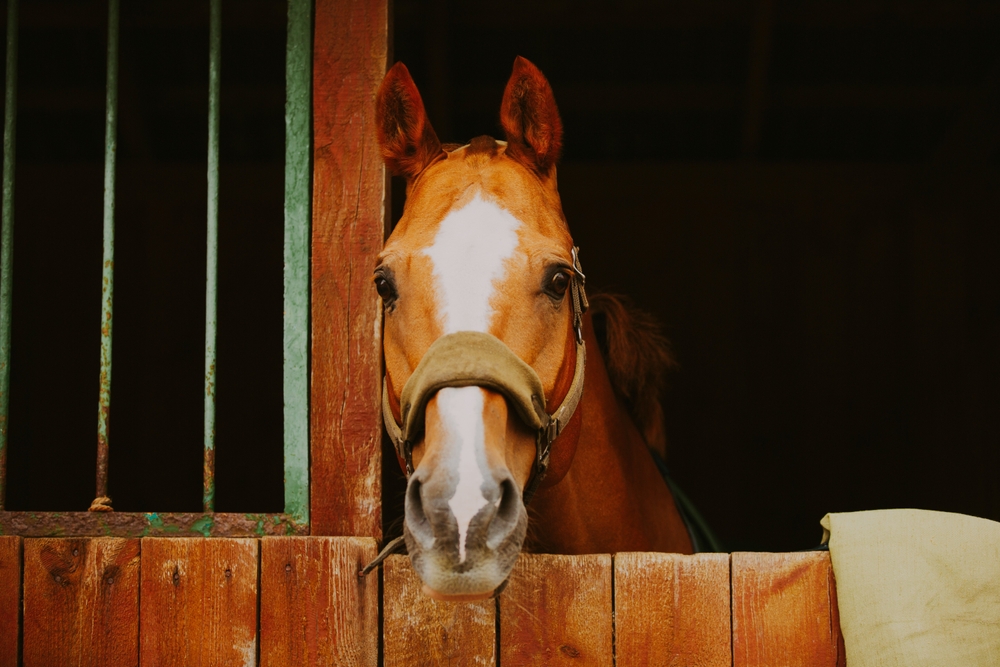
Equine Dentistry
Our equine dentistry looks at what sits at the center of how a horse eats, moves, and performs, yet is one of the most consistently underestimated aspects of a horse’s care. At Metamora Equine, Dr. Roland Thaler, VMD DACVSMR, approaches equine dentistry as an essential part of your horse’s overall health, comfort, and athletic function, not just an annual checkbox. That means looking beyond the teeth to evaluate the full oral system, including the TMJ and poll, and understanding how imbalances there affect everything from how your horse carries itself to how it responds under saddle.
What Makes Equine Dental Care More Than a Float
Many horse owners associate dental care with floating, smoothing sharp enamel points to prevent mouth sores and make chewing more comfortable. That’s a necessary step, but it’s only one part of what a thorough dental appointment should accomplish. Hooks, ramps, wave mouths, and uneven wear patterns all develop over time and require specific correction that goes well beyond a routine pass with a float.
A complete equine dental assessment also evaluates the TMJ and poll, two structures that directly influence how your horse’s jaw moves and how it holds its head and neck. When these areas are restricted or out of alignment, the effects show up as stiffness, resistance, or reduced range of motion, problems that are easy to misread as training or lameness issues. Treating the full oral system, rather than just the teeth, is what produces results that are actually felt in the saddle.
Benefits of Equine Dentistry
Improved Comfort Under Saddle
Dental imbalances create pain that shows up in unexpected ways: head tossing, bit resistance, or tension through the neck and back. When your horse’s mouth is properly balanced, it’s better able to relax through its topline, accept contact, and work with greater ease. Comfort in the mouth translates directly to comfort under the saddle.
Enhanced Athletic Performance
In equine sports medicine, the connection between oral health and physical output is well-established. A horse with dental issues often compensates by shifting its weight, shortening its stride, or avoiding lateral flexion. Correcting dental imbalances allows your horse to move more freely, use its body symmetrically, and perform with greater consistency.
Better Nutrition and Weight Management
Horses with sharp points, hooks, or uneven wear patterns often have difficulty chewing hay and grain efficiently. This leads to poor feed utilization, weight loss, and even choke or colic risk. Regular dental care ensures your horse can properly process its forage, which supports healthy body condition year-round.
Reduced Resistance and Behavioral Issues
Many behavioral problems have a dental root cause. When sharp edges cut into cheek tissue or uneven teeth alter jaw movement, horses react defensively. Addressing these issues often resolves what appears to be a training problem, making your horse more willing and easier to work with.
Long-Term Oral Health Preservation
Horses have hypsodont teeth, meaning they erupt slowly over a lifetime. Without regular care, abnormal wear patterns compound over time, leading to wave mouths, ramps, or hooks that become increasingly difficult to correct. Consistent dental maintenance preserves your horse’s ability to eat and perform well into its senior years.
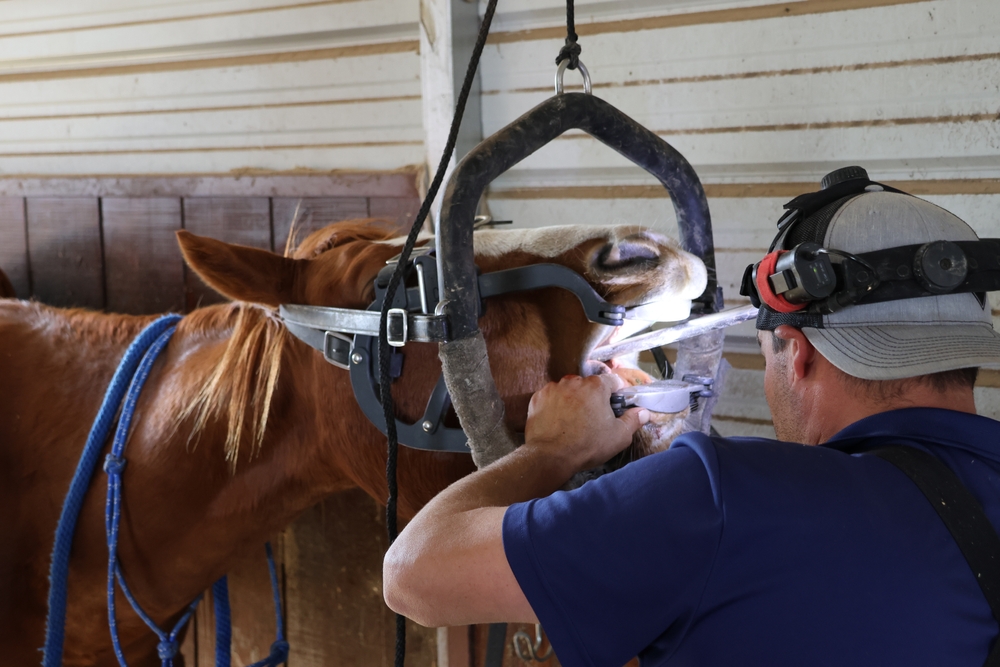
How We Approach Every Dental Visit

Why Choose Our Approach to Equine Dentistry
A dental appointment here doesn’t feel like a transaction. From the first conversation to the post-treatment walkthrough, you’ll know what was found, what it means for your horse, and what the plan is going forward — in plain language, not clinical shorthand. Owners who’ve spent years guessing why their horse resists the bit or loses weight despite eating well often leave with answers they didn’t expect to find in a dental visit.
That kind of clarity is built into how Dr. Roland Thaler, VMD DACVSMR, works. Every finding is explained, every recommendation has a reason behind it, and you’re treated as an active participant in your horse’s care rather than a bystander. At Metamora Equine, the standard isn’t just competent dental work — it’s making sure you understand your horse’s oral health well enough to recognize when something changes and know when to call.

Schedule Our Equine Dentistry Evaluation
That kind of shift starts with one appointment for our equine dentistry services. Owners are often surprised by how much changes after a thorough dental visit. Horses that were resistant under saddle move more freely, horses that struggled to hold weight start thriving, and problems that looked like training issues turn out to have a straightforward oral cause.
If you want to see the work before booking, Metamora Equine’s Instagram is where real cases are documented, the findings, the process, and the results. Our Facebook page is where owners ask questions, share experiences, and stay current on what comprehensive equine dental care looks like. When you’re ready to schedule, Dr. Roland Thaler, VMD DACVSMR, and the team are one call away at 248.310.5568!
FAQs
What is equine dentistry?
Equine dentistry is a branch of veterinary medicine focused on the diagnosis, treatment, and prevention of conditions affecting a horse’s oral cavity, teeth, jaw, and related structures. It goes far beyond basic tooth filing to include evaluation of the TMJ and poll, both of which influence how a horse moves and functions. A complete dental assessment considers oral health as part of the horse’s overall physical balance and athletic capacity.
Why is equine dentistry important?
Horses’ teeth continuously erupt and wear throughout their lives, making them prone to developing sharp edges, hooks, and imbalances that cause pain and affect function. Left unaddressed, dental problems can lead to poor feed utilization, behavioral issues, resistance under saddle, and compensatory movement patterns. Regular dental care helps prevent these issues and supports your horse’s long-term comfort, soundness, and performance.
What are equine dental floats commonly made of?
Equine dental floats are typically made of metal, with abrasive surfaces such as carbide or stainless steel cutting edges designed to smooth sharp enamel points on the teeth. Both hand floats and motorized power floats are used in modern equine dentistry, depending on the situation and the veterinarian’s preference. The goal is to achieve balanced, even wear that supports proper jaw movement and comfortable chewing.
How often does a horse need dental care?
Most horses benefit from a dental evaluation at least once a year, though some may need attention every six months depending on their age, diet, and dental history. Young horses going through tooth eruption and older horses with complex wear patterns often require more frequent monitoring. Your veterinarian can recommend a schedule based on your horse’s specific needs rather than a generalized timeline.
What is a dental float for horses?
A dental float is the procedure used to file down sharp enamel points and correct uneven wear on a horse’s teeth. The term comes from the tool historically used to smooth the teeth, though modern veterinary dentistry involves much more than this single step. Floating is one part of a comprehensive oral care visit that may also include addressing hooks, ramps, wave mouth, or other imbalances affecting the horse’s comfort and function.