Soundness You Can trust: From The Schooling Ring To The Grand Prix Ring
Schedule a performance-focused gait assessment

Columbus sits at the center of serious Ohio horsemanship, and our vets in Columbus, Ohio deliver veterinary care built to match that level of commitment. Metamora Equine brings board-certified equine sports medicine and advanced veterinary services to Columbus-area barns, pairing the diagnostic depth of a specialty clinic with the practicality of a practice that travels to you. Dr. Thaler, VMD DACVSMR, has spent more than four decades working exclusively with elite sport horses, and his approach to diagnosis reflects both the science behind that credential and the experience behind those years.

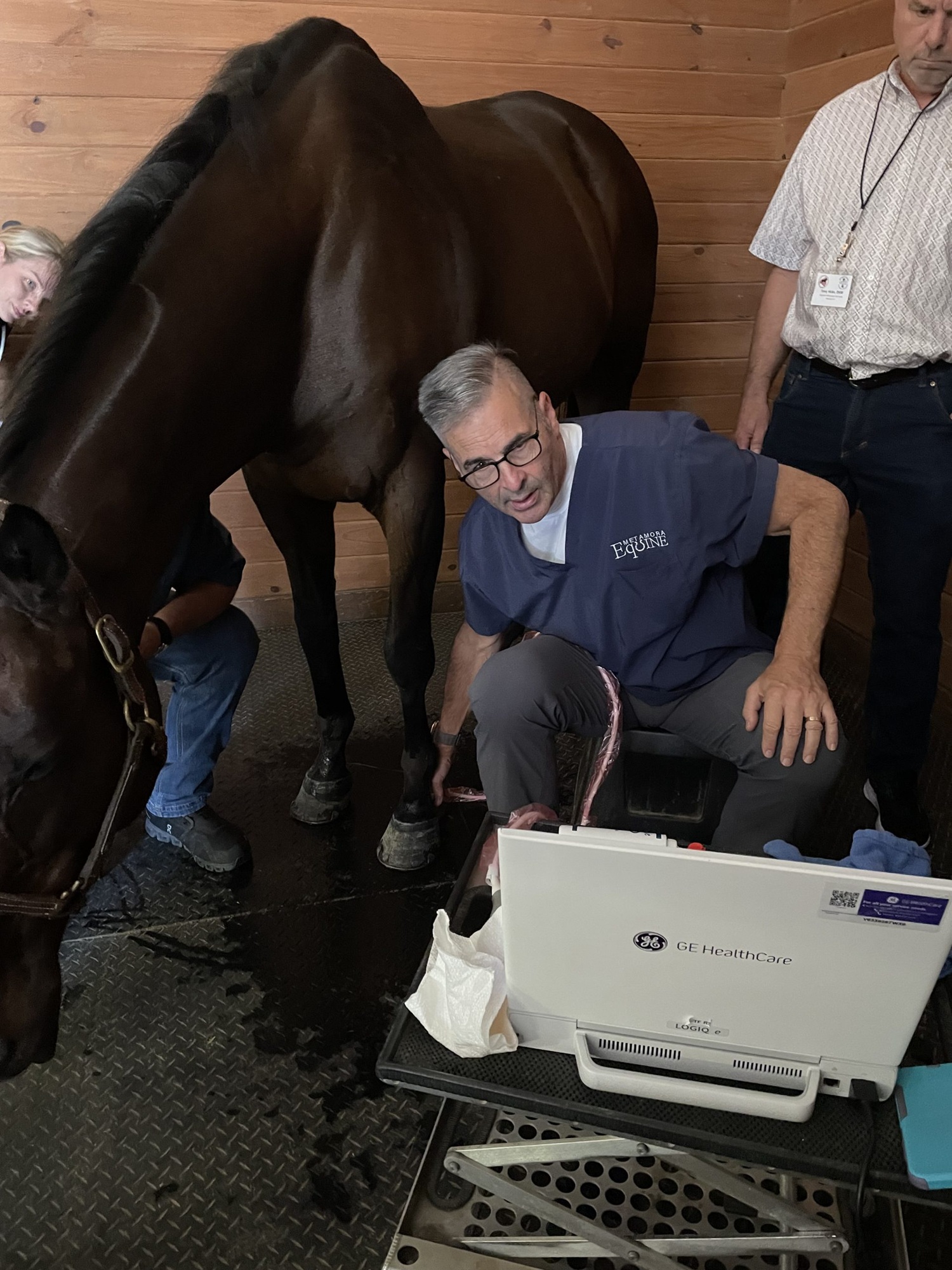
Metamora Equine delivers advanced, performance-focused veterinary care for competition horses, led by Dr. Thaler’s board-certified expertise in equine sports medicine. Every service supports accurate diagnosis, long-term athletic success, and thoughtful treatment.
We provide exceptional care for your equine athlete. Metamora Equine brings evidence-based medical solutions to the stall. We leverage technology and 40 years of experience to deliver health care to your horse.
Comprehensive care: working with your trainer, your farrier and you to provide the optimum performance management for your horse.
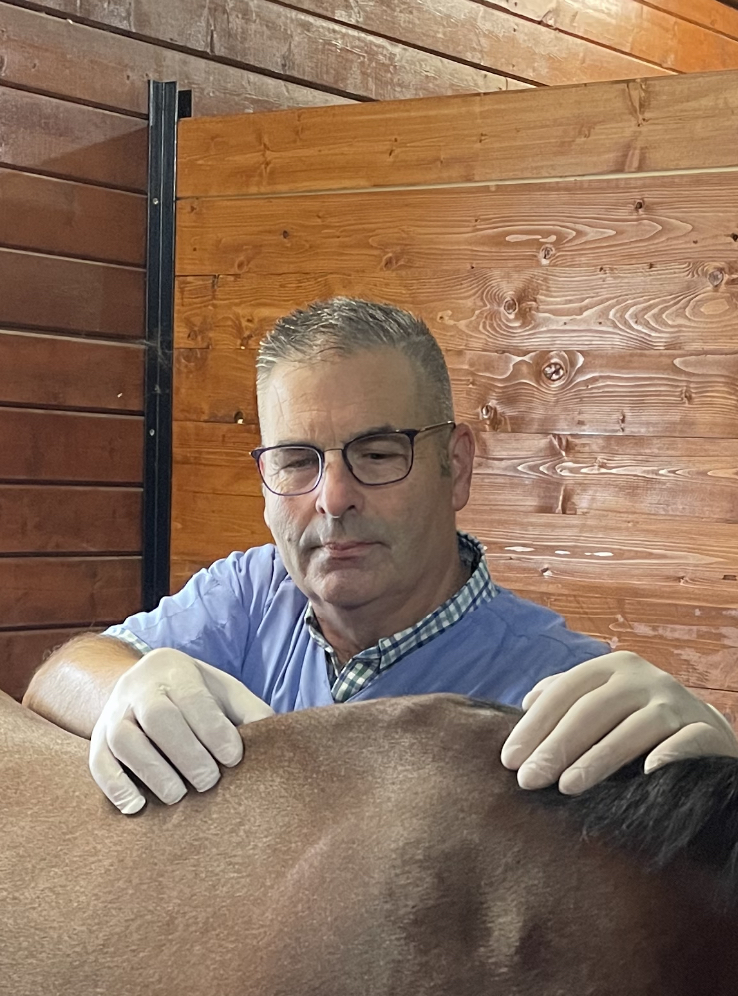
A graduate of the University of Pennsylvania School of Veterinary Medicine, Dr. Thaler has built one of the most credentialed ambulatory equine sports medicine practices in the country. Here is who to call when you reach out to Metamora Equine.
Board certification through the American College of Veterinary Sports Medicine and Rehabilitation is not a title conferred by tenure. It reflects demonstrated competency in diagnosing and managing the conditions that limit athletic horses. Dr. Thaler earned that certification alongside Fellowship in the College of Animal Chiropractors and certified membership in the International Society of Equine Locomotor Pathologists, a combination that grounds him in biomechanics, locomotor pathology, and structural assessment in ways that few ambulatory practitioners can match. He spent years as an adjunct professor at Michigan State University’s College of Veterinary Medicine and has contributed to the publications and advisory boards that shape how the field evolves. When other equine veterinarians encounter a case that isn’t responding or doesn’t fit the usual pattern, Dr. Thaler is frequently who they call.
Lameness in competition horses is rarely straightforward, and the horses that need this service most are often the ones that look almost fine. These sections cover who benefits, how the evaluation works, and what research shows about the cost of catching it late versus early.
Lameness at the competition level rarely looks like obvious three-legged unsoundness. It shows up as a horse that drifts toward one rein, loses rhythm in the canter before a fence, braces through shoulder-in, or simply feels less willing than it did two months ago. If your trainer or rider has flagged a subtle change that doesn’t have a clear explanation, a lameness evaluation is the right next call.
Horses being pointed toward significant competition, horses returning to work after any extended time off, and horses whose riders have noticed a qualitative change without a specific incident all have good reason for evaluation. Hunter/jumper horses that chip distances, dressage horses whose engagement has dropped in specific movements, and eventers that have become hesitant on course are particularly common presentations. Pre-purchase evaluation for any horse being considered for a demanding competition career is also a strong candidate, because baseline information gathered before a purchase protects both the buyer’s investment and the horse’s welfare.
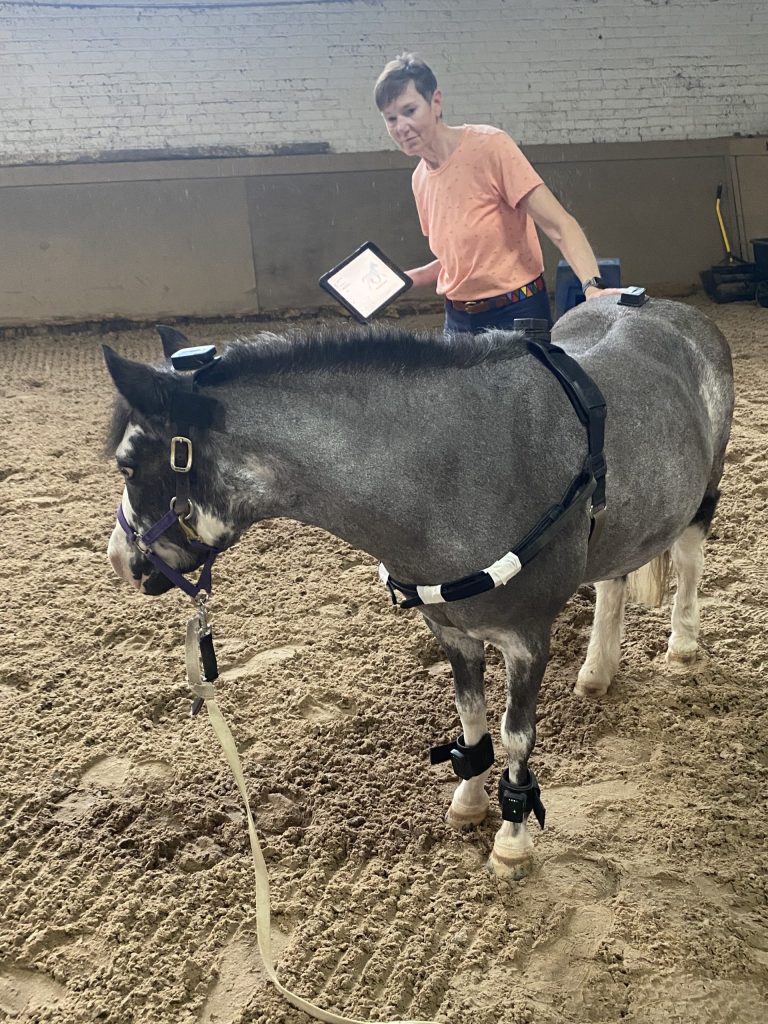
We start by listening. Your observations, your trainer’s notes, and the horse’s competition history shape which parts of the evaluation deserve the most attention. Movement assessment follows across multiple gaits, directions, and surfaces. The Arioneo Vet Equisym System provides objective, quantified gait data that confirms what we observe and catches movement asymmetries that exceed the eye’s resolution. Diagnostic anesthesia locates the source of pain systematically by eliminating structures and regions until movement changes measurably. Digital radiography characterizes bone and joint changes, while ultrasound directly images the soft tissue structures at the identified location.
Lameness evaluation does not sit at the end of a long troubleshooting process. It belongs at the beginning, before training adjustments, before guesswork, and before time passes with the underlying condition continuing to develop. The findings tell your farrier, your trainer, and your primary care veterinarian what they are actually working with. Treatment decisions made from an accurate diagnosis produce outcomes that treatment decisions made from assumptions rarely match.
The horse that finished last season carrying a training note attached deserves evaluation before the new season starts. The horse showing subtle attitude changes during schooling warrants a call before those changes deepen into a behavioral pattern. Waiting for an unambiguous, obvious lameness means waiting for the condition to worsen, and horses that arrive at evaluation with earlier-stage findings consistently have more treatment options available. Pre-season evaluations, wellness care checks, and pre-competition screenings are among the most productive uses of this service.
Visual observation and basic examination have well-documented limits when it comes to low-grade and multifocal lameness in active competition horses. A 2025 study published in Animals found a “high prevalence of multilimbed lameness (44.9%)” when 272 dressage horses received comprehensive orthopedic examination. Nearly half of those horses had simultaneous lameness involving more than one limb, a distribution that single-point or visual-only assessment cannot reliably detect. Without objective evaluation, those horses continue in training with incomplete diagnoses, and the secondary problems that develop from compensation add complexity to what was once a more straightforward case.
A horse adapts its movement the moment a painful structure begins to load differently. That adaptation shifts weight to compensate, and the structures absorbing that shifted weight were not designed for it. Research from Cornell University published in The Veterinary Journal states plainly that “joint disease and OA are the leading cause of retirement in equine athletes,” a career-ending trajectory that begins with exactly the kind of early lameness that thorough evaluation is built to catch. The horses that leave competition before their time typically share one thing in common: an early change that was not taken seriously enough to warrant diagnosis.
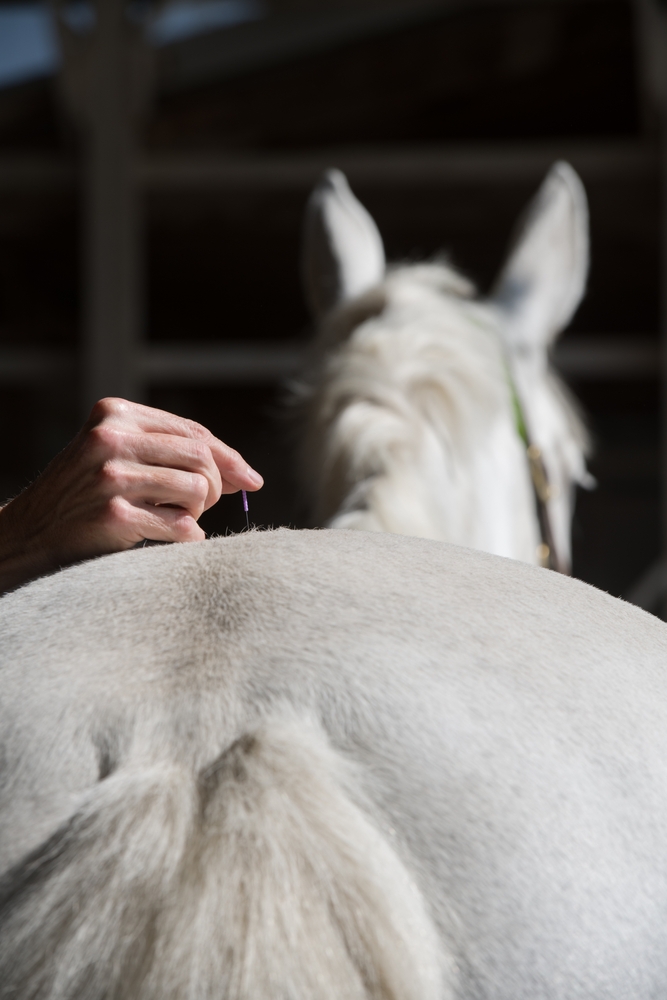

When a horse is working hard and the results say otherwise, the explanation is rarely in the training. These sections explain who needs this evaluation, how it works across multiple body systems, and what happens when the physical factors behind poor performance are left unaddressed.
You know your horse. You know when the work feels different even if you can’t describe exactly what changed. Poor performance assessment exists for the gap between “something is wrong” and knowing what that something is. It is the right service when training changes haven’t produced the improvement they should have, when your horse is working but not showing up mentally during sessions that used to go well, or when the score sheets are telling a story that your eyes in the saddle already knew.
Some clinical questions can only be answered by looking directly at the structure in question. These sections cover when diagnostic imaging is indicated, what it involves at your barn, and what the evidence says about the difference between imaging early and imaging late.
Clinical examination identifies where a problem is. Diagnostic imaging identifies what the problem is. When physical assessment has localized pain or identified a region of concern, imaging is the next step that turns clinical suspicion into a confirmed diagnosis and confirmed diagnosis into a treatment plan aimed at the right target. If your horse has not responded to treatment as expected, if a specific area has repeatedly been involved in lameness presentations, if findings may require surgical care to resolve, or if pre-purchase examination has raised a structural question that needs characterization, imaging belongs in the plan.
Horses where diagnostic anesthesia or physical examination has localized lameness to a specific structure or region are the most immediate candidates. Horses where recurring lameness in the same limb or region has not been fully characterized, and horses whose response to previous treatment has been incomplete, often have underlying pathology that hasn’t been properly imaged. Pre-purchase candidates where physical examination has located a potential concern also benefit from imaging that puts an accurate, documented picture of the finding on record before the purchase decision is made.
Our mobile imaging equipment travels to your facility, which means your horse is assessed in the environment it knows rather than a veterinary clinic setting that adds stress to an already uncomfortable presentation. Ultrasound provides direct visualization of tendons, ligaments, and soft tissue architecture. Digital radiography evaluates bone structure, joint margins, and the skeletal changes that follow sustained abnormal loading. Findings are reviewed in real time, and we walk through them with you before leaving so you understand what was found and what it means for treatment planning. When a case requires imaging modalities that cannot be performed in the field, including MRI, CT, or nuclear scintigraphy, we coordinate with veterinary hospital facilities and remain part of the process rather than stepping away from the case.
Imaging sits between localization and treatment. It is what bridges the diagnostic anesthesia finding to the clinical decision about how to treat. Results are shared with your regular veterinarian so that subsequent care decisions, whether managed by our practice or yours, are grounded in complete information. Treatment choices made without imaging carry a meaningful risk of addressing the wrong structure, and horses whose treatment fails often reveal on imaging that the target was never right to begin with.
Imaging is indicated when clinical examination has found a region of concern that needs structural characterization, when conservative treatment has not produced the expected improvement, and when pre-purchase evaluation has located a finding that requires objective documentation. The timing matters because preventative medicine thinking applies directly here: conditions caught early have more treatment options than those found after months of undetected development under continued work.
Physical examination tells you where the problem is. It cannot tell you what you will find once you look. A peer-reviewed study in Animals examining structural conditions in athletic horse populations found that without advanced imaging, “subtle cases involving only the articular cartilage may be missed,” a particularly meaningful gap given that osteochondrosis affects an estimated 33 to 44 percent of sport horses. Advanced imaging does not replace clinical judgment. It gives clinical judgment something accurate to work from, and the combination produces diagnostic conclusions that neither examination nor imaging alone reliably achieves.
Equine joint conditions do not wait for symptoms to catch up to pathology. Research published in the Equine Veterinary Journal identifies that because these conditions develop slowly, by the time standard examination identifies the problem, “substantial damage to the joint, including articular cartilage degradation, has already occurred.” Imaging performed at the point of first clinical concern rather than after symptoms have persisted finds conditions in the stage where conservative management is still viable, before the situation has progressed to require soft tissue surgery or other advanced intervention coordinated through a referral facility.
40+ years of experience. National reputation. Proven clinical and business leadership.



Metamora has really great imaging that they bring right to us. It allows them to follow every lead to fruition. No waiting and no guessing. They also take a very methodical approach to every exam. It’s a process, like building a puzzle, so using diagnostics and technology to collect data reveals another part of the puzzle.
Sarah Ash, Trainer, True Course Farm
Doctor Thaler is incredible at diagnostics. He has the tools, the training, and the experience to solve challenges that other vets really could not. Figuring out lameness can be very subjective. Dr. Thaler uses technology to look for answers and tell him things that the rider can’t, that the horse can’t.
Cindy Petherbridge, Trainer, Huntsover Farms
With Metamora, the horse comes first. They bring urgency and care to every visit. They’re good with the horses – even difficult ones – and then they take the time to talk to the owner or the rider.
The technology has always been the thing that impressed us. Doctor Thaler has the science that backs it up. He has the tools and the techniques, and he’s done the studies and read the latest news. When he makes a suggestion, there are facts behind it, not a guess. He gives you the best of all the options available for whatever we are dealing with.
Rhonda Wille, Owner
It’s easy for vets who see hundreds of horses to quickly turn to solutions that have worked for them before. In contrast, Dr. Thaler is always gaining new knowledge. He has the most modern and best diagnostic equipment, and so he suggests new perspectives and ideas. That’s important to being successful in diagnosing injuries and problems.
For clients serious about performance, Metamora is my go-to. Dr. Thaler is the top sports veterinarian and a partner and resource for diagnosing lameness and other problems, as well as suggesting therapeutic solutions.
Garth Short, Owner, Horseshoeing Incorporated
The communication from Metamora is key. I am always contacting them first with my questions. They’re ability to answer the call and provide service to clients is unmatched, even if that means going the extra mile to accommodate.
Leah Smaller, Professional Rider and Trainer
Doctor Thaler has a problem-solving mindset. There’s no one better at finding an issue. He uses technology and experience to understand the issue.
Jaafar Reza, Trainer, Gross Point Equestrian
There are many different therapeutic applications that promote healing. Dr. Thaler comes in with the science. He’ll study the X-rays and do the diagnostics, then I’ll do the farrier work. We’ve brought horses back from lameness and saved horses that otherwise would be done. He’s 100% onboard to get the horse through it.
This practice defines excellence
Dana Wille, Head Trainer, Equine Odyssey
Sometimes I walk into a barn and know Metamora’s been there because there is a picture drawn of a horse’s leg showing where this injury was. Dr. Thaler is great at explaining complex things very simply.

Columbus-area sport horses carry serious competitive ambitions, and our vets in Columbus, Ohio provide the specialized care needed to match them. Whether the question is a lameness that hasn’t been fully explained, a performance plateau that training adjustments haven’t touched, or structural findings that need diagnostic imaging to characterize properly, Metamora Equine brings those veterinary care services and diagnostic capability directly to your barn. Reach out at 248.310.5568 before the problem has had more time to develop.
Questions from Columbus-area clients about how scheduling works, what to expect on the first visit, our regional coverage, and what sets this practice apart. If something isn’t covered here, call us directly and we’ll give you a straight answer.
Call our office or use the contact form on our website. Bonnie Thaler manages all scheduling for the practice and will ask about your horse’s situation before the visit so Dr. Thaler arrives prepared. Columbus-area appointments are coordinated as part of our regular Ohio route, and Bonnie can give you a realistic picture of current availability and timing. For emergency services and urgent cases, contact us directly rather than booking online and we will work to respond quickly.
The visit begins with a conversation, not an examination. Dr. Thaler asks detailed questions about history, what you have noticed, what your trainer has observed, and what the competitive schedule looks like, because that context shapes everything that follows. Movement assessment and hands-on evaluation come next. If the presentation calls for diagnostic procedures on the same visit, those are discussed and completed before Dr. Thaler leaves. You will have a clear summary of findings and a specific recommended next step before we pack up.
Dr. Thaler is based in Davisburg, Michigan, and travels a regional circuit that includes Columbus and surrounding Ohio areas on a regular basis, alongside barns and competition facilities across Michigan and in North Carolina and South Carolina. The fully ambulatory model means your horse receives veterinary care at home, which reduces the stress of transport and produces findings that reflect how your horse actually moves in its own environment.
Two to four weeks out is a reasonable window for planned evaluations and pre-season work. During peak competition season, earlier booking gives you better options. If your horse’s situation calls for urgent care, call us directly. Bonnie will tell you honestly what the current schedule looks like and find the fastest reasonable option rather than putting you at the back of a waiting list without context.
The honest answer is the combination of credentials, focus, and experience. Board certification through the American College of Veterinary Sports Medicine and Rehabilitation, additional credentialing in animal chiropractic and equine locomotor pathology, and more than four decades spent working exclusively with sport horses at the competition level are not common in an ambulatory practice. Dr. Thaler is also routinely the practitioner that other equine vets call when a case is not adding up. That kind of referral reputation reflects a level of diagnostic precision that straightforward cases do not build on their own.

©2026 Metamora Equine. Designed and Managed by ViziSites. Terms of Use. Website Accessibility.