Soundness You Can trust: From The Schooling Ring To The Grand Prix Ring
Schedule a performance-focused gait assessment

At Metamora Equine, our veterinarians in Michigan serve horse owners across the state by bringing advanced diagnostic services directly to the barn. Michigan has a substantial equestrian community, and most of the horses competing across the state get adequate care from their regular veterinarians. But there is a category of problem that general practice was not built to solve: the horse that keeps losing ground despite treatment, the lameness that clears one exam but comes back, the performance drop that nobody can pin down. For those cases, Michigan horse owners have one board-certified equine sports medicine practice to call.

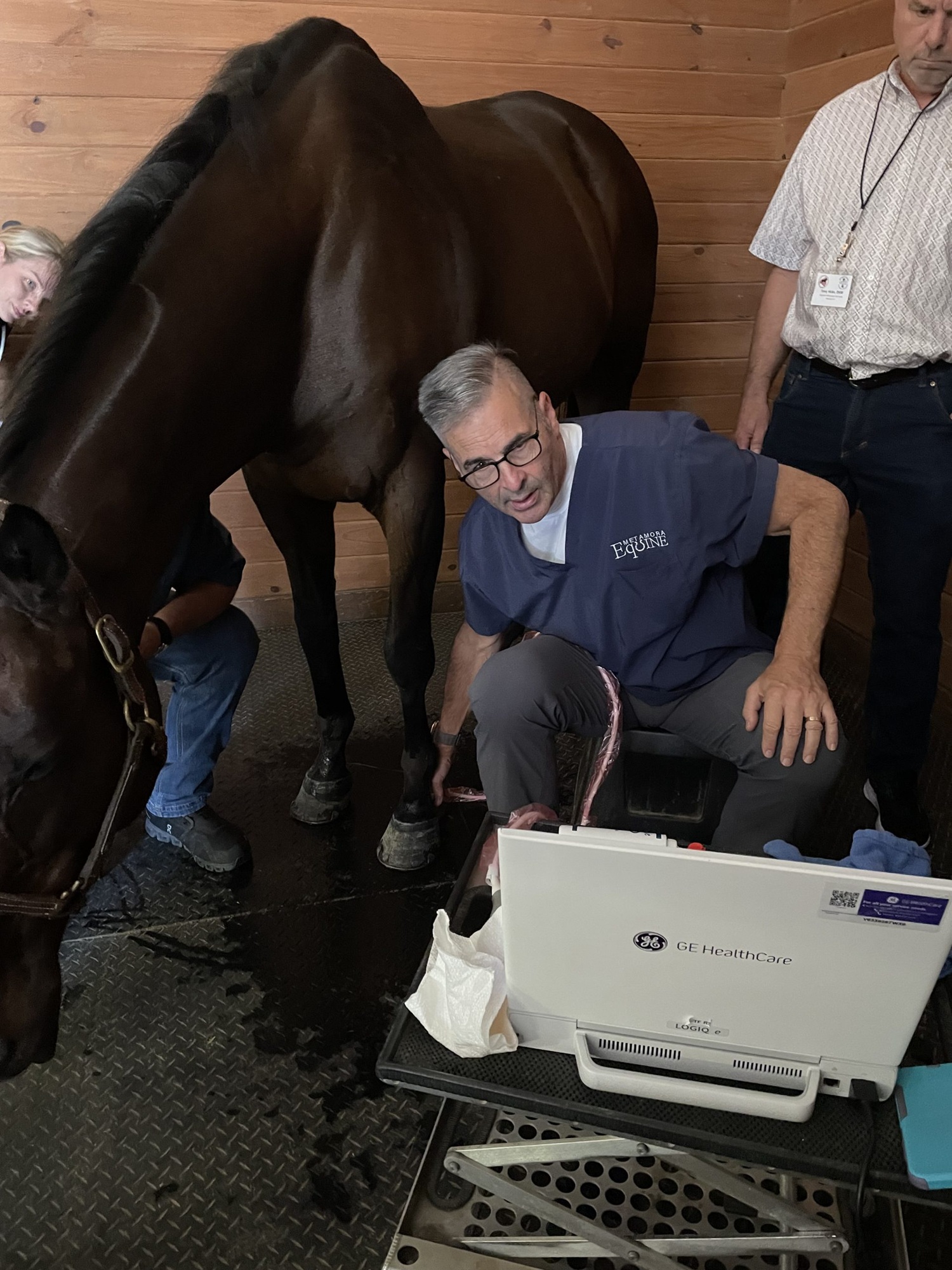
Metamora Equine delivers advanced, performance-focused veterinary care for competition horses, led by Dr. Thaler’s board-certified expertise in equine sports medicine. Every service supports accurate diagnosis, long-term athletic success, and thoughtful treatment.
We provide exceptional care for your equine athlete. Metamora Equine brings evidence-based medical solutions to the stall. We leverage technology and 40 years of experience to deliver health care to your horse.
Comprehensive care: working with your trainer, your farrier and you to provide the optimum performance management for your horse.
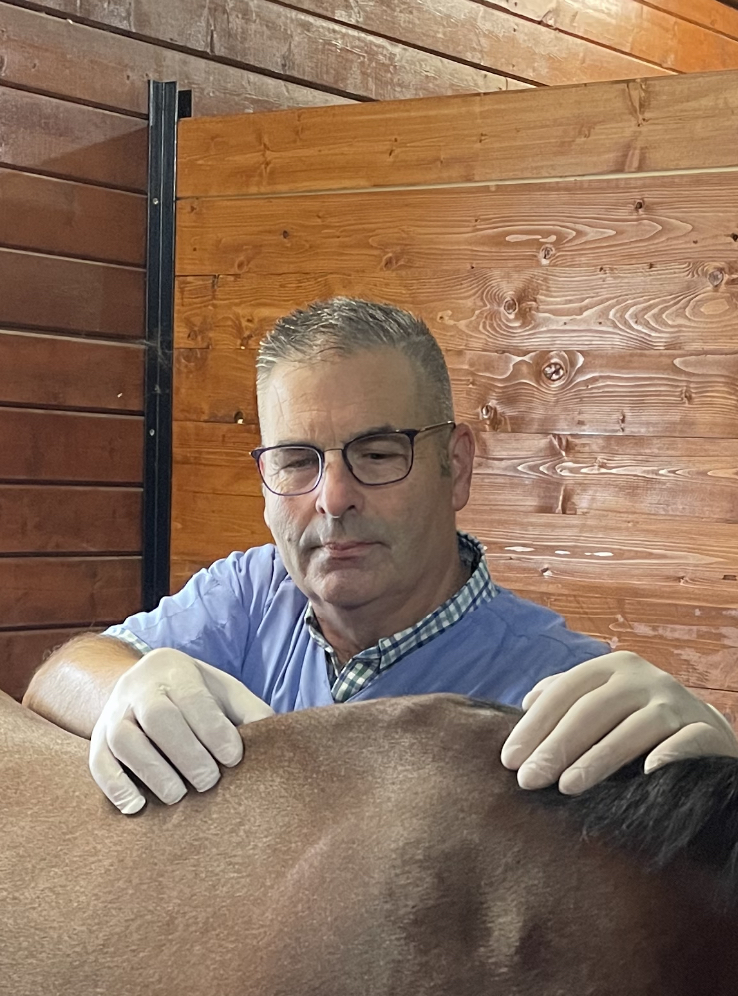
Dr. Thaler brings over 40 years of equine sports medicine experience to horse owners throughout Michigan and beyond. As a board-certified Diplomate of the American College of Veterinary Sports Medicine and Rehabilitation (DACVSMR), he holds a level of specialization in veterinary medicine that most Michigan veterinarians in general practice do not carry. His credentials include Fellowship in the College of Animal Chiropractors and certification with the International Society of Equine Locomotor Pathologists (ISELP). What separates his approach from standard care is the commitment to finding out why a horse has a problem rather than managing what shows up on the surface. Working alongside practice manager and veterinary technician Bonnie Thaler, the team has built a loyal clientele of competitive riders, trainers, and owners across Michigan who call on them when the regular vet has reached the limits of what general practice can find.
Michigan horse owners often spend months trying to fix a lameness problem before getting an evaluation that actually identifies it. The gap between what a standard exam catches and what a systematic, technology-assisted evaluation finds is where horses lose careers. Our lameness management process is built to close that gap.
Performance horses showing subtle gait changes often have issues that standard exams miss. Our detailed movement analysis catches these problems early, before they affect your horse’s career or cause lasting damage.
Any competition horse whose movement has changed, whose scores have dropped without explanation, or who feels different under saddle than they used to is worth evaluating. Horses returning from injury should have formal movement assessment before going back to full work rather than relying on a visual clearance. Animals that trainers describe as “not quite right” but who appear sound on a straight line are among the most common candidates we see, because that is exactly where subtle lameness hides. Young horses entering training and older competitors showing gradual decline are also strong candidates. Pre-purchase evaluation for competition horses should always include proper movement analysis, not just a basic soundness check.
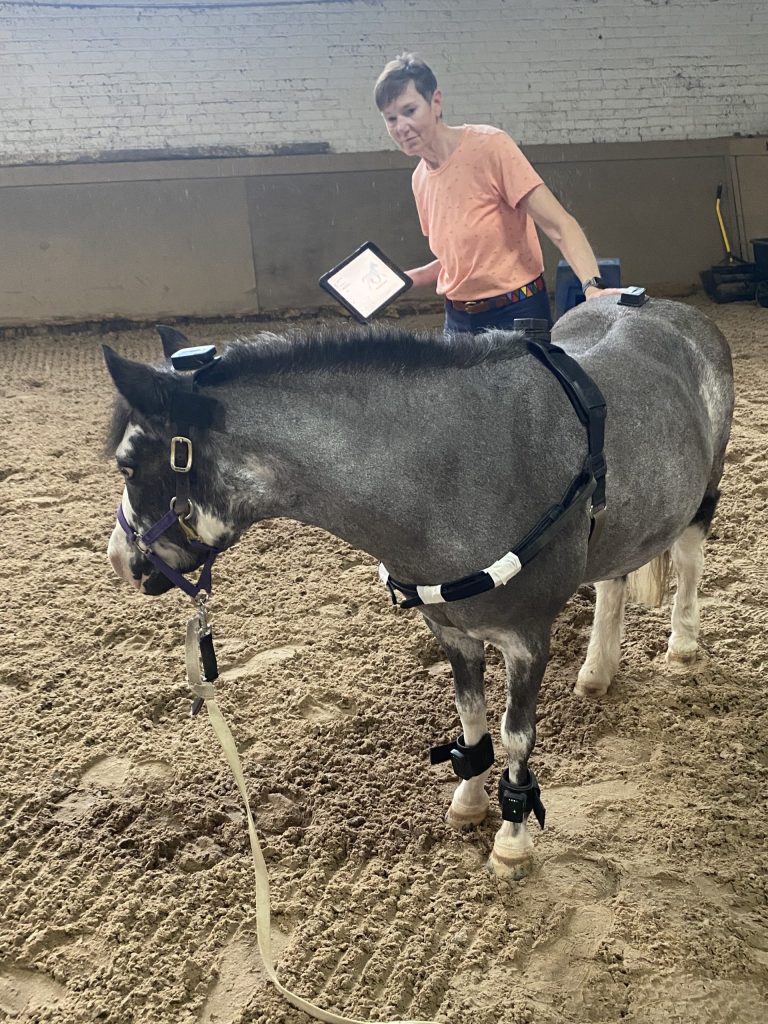
We start with a thorough review of your horse’s history, competition records, and any previous veterinary findings. Physical examination covers muscles, joints, and spine. The Arioneo Vet Equisym System captures objective gait data that visual observation cannot produce, measuring stride asymmetry with precision that removes the subjectivity from subtle cases. Targeted nerve blocks identify exactly where pain originates, giving us a specific target rather than a general area. Muscle assessment maps compensation patterns and secondary issues that reveal how long the primary problem has been present. Every evaluation ends with a clear explanation of findings and a written report before we leave your barn.
A proper lameness evaluation goes well beyond general checkups and forms the clinical foundation every treatment decision should be built on. Without knowing the source of the problem, rest is a guess, injections may target the wrong area, and training changes treat symptoms rather than the cause. Our findings give your farrier, trainer, and regular veterinarian a shared clinical picture to work from. We coordinate across your entire care team and schedule follow-up evaluations to track progress rather than assuming the treatment is working.
Book evaluation when you first notice a change, not when the problem becomes undeniable. By the time a horse is visibly, consistently lame, the underlying condition has typically been developing for months and secondary compensatory injuries have already started forming. Pre-season evaluation is worth scheduling before competition demands increase. Horses returning from time off need assessment before hard training resumes. Post-competition evaluation after a demanding stretch catches minor issues before they compound.
The difference between what a basic veterinary check finds and what a systematic evaluation produces is not a matter of effort. It is a matter of tools. Research published in the Equine Veterinary Journal 2010 found that when experienced clinicians assessed mild lameness cases with a mean AAEP score at or below 1.5 using visual methods alone, they agreed on the correct diagnosis only 61.9% of the time, meaning nearly four in ten low-grade cases were assessed inconsistently without objective evaluation tools. Our gait analysis system, diagnostic anesthesia, and board-certified interpretation are specifically designed to address this gap. Basic exams catch obvious problems. Our evaluation finds the ones quietly limiting your horse’s career.
Horses compensate for pain rather than stopping. Each compensation pattern adds new mechanical stress to structures that were not originally involved, and the original problem keeps developing underneath. A case-control study published in Frontiers in Veterinary Science, drawing on necropsy data from the California Horse Racing Board, found that Thoroughbred racehorses suffering catastrophic musculoskeletal injuries “were more likely to show signs of lameness within the three months prior to death compared to controls,” directly linking unresolved lameness signs to fatal outcomes in horses that continued to compete. The cost of a missed lameness diagnosis extends well beyond the veterinary bill: lost competition time, secondary injuries in other limbs, reduced horse value, and in the worst cases, a career that ends when early intervention could have kept the horse competing for years more.

When a horse’s results slide and the training program has not changed, the instinct is usually to train harder or adjust the equipment. That works when the issue is training-related. When the issue is physical, it delays diagnosis and lets whatever is driving the decline continue to progress.
Horses that look healthy but consistently fall short of what their training history suggests they can do almost always have a physical explanation. Finding it requires looking at every system that drives athletic output, not just the ones that are easy to check.
When physical examination tells you something is wrong but not exactly what, imaging turns clinical suspicion into a specific diagnosis. We perform digital radiography and ultrasound in the field and coordinate referral for advanced imaging when a case needs it.
Clinical findings point you toward the problem. Imaging shows you what it actually is. That distinction matters because treatment built on a specific, confirmed diagnosis consistently produces better outcomes than treatment built on educated guesses.
Horses with suspected tendon or ligament injuries need ultrasound to confirm the type and extent of damage. Joint problems and bone pathology need digital radiography for accurate characterization. Horses with chronic lameness that has not responded to conservative treatment often have imaging-detectable conditions that earlier examinations missed. Competition horses undergoing pre-purchase evaluation, young horses with developmental concerns, and any horse where a treatment decision depends on knowing exactly what is present internally are all appropriate imaging candidates.
We bring digital radiography and ultrasound directly to your barn as part of most lameness and performance workups. Ultrasound visualizes soft tissue injuries including tendon damage, ligament lesions, and muscle pathology. Digital radiography reveals bone problems, joint changes, and structural issues. When a case requires imaging that cannot be performed in the field, including MRI, CT, or nuclear scintigraphy, we coordinate referral to a veterinary hospital or specialist imaging center. Findings are discussed with you immediately during the same visit, so you leave with clear answers rather than waiting days for a report. We also offer second-opinion reviews for horses whose previous imaging from other Michigan veterinarian practices needs expert interpretation before treatment decisions are made.
Imaging provides the specific information that makes treatment planning precise rather than broad. Results confirm diagnoses, guide decisions between conservative and surgical treatment, and establish a baseline for tracking how healing progresses. Follow-up imaging confirms whether treatment is working and determines when a horse can safely return to work. Pre-purchase imaging gives buyers a clear picture of structural soundness before committing. Imaging findings work alongside clinical examination to give you a complete picture of what is happening and what to do about it.
Schedule imaging when clinical signs point to an internal problem that physical examination alone cannot fully characterize. Acute injuries often need prompt imaging to assess severity and rule out fractures. Chronic conditions benefit from imaging when they are not responding to treatment as expected. Pre-purchase exams should include imaging appropriate to the horse’s age, intended use, and price point. Horses returning from injury should have imaging to confirm adequate healing before training resumes.
Treating a horse without imaging when imaging is clearly indicated is not a cost-saving decision. It is a diagnostic gap that delays effective treatment and drives up total costs over time. Research published in Animals 2023 comparing ultrasound and MRI for soft tissue injuries in the equine digit found that while ultrasound had good sensitivity for some lesions, “clinically significant concurrent damage to the distal DDFT and other osseous and soft tissues in the hoof capsule is unlikely to be identified without MRI.” This is why, when in-field imaging reaches its limits, we coordinate referral to specialist imaging rather than leaving the diagnostic picture incomplete. The right imaging at the right time closes the gap between a partial diagnosis and a complete one.
Conditions that need imaging for accurate characterization do not improve while waiting. Soft tissue injuries allowed to progress without imaging-guided treatment develop fibrous scar tissue that compromises healing quality and increases reinjury risk. Research published in the Veterinary Record 2010 examining 56 horses treated conservatively for foot pain found that 60.7% “failed to return to previous level of exercise due to persistent or recurrent lameness,” with horses presenting concurrent multi-structure lesions facing the worst outcomes of all. These are cases where the window for targeted, effective treatment had closed before the full picture was visible. Early, accurate imaging keeps that window open.
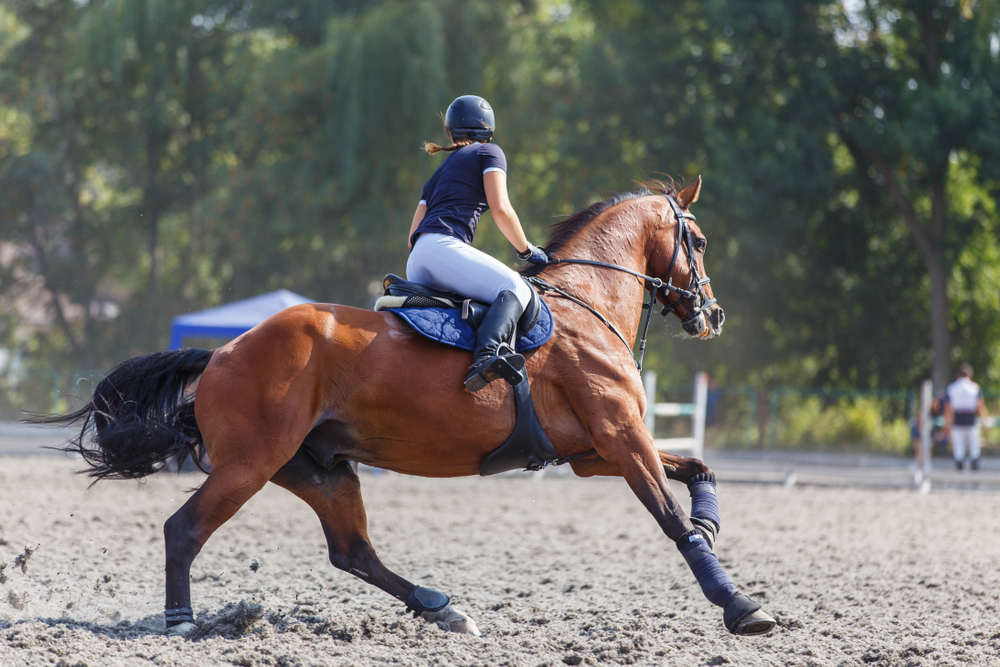
40+ years of experience. National reputation. Proven clinical and business leadership.



Metamora has really great imaging that they bring right to us. It allows them to follow every lead to fruition. No waiting and no guessing. They also take a very methodical approach to every exam. It’s a process, like building a puzzle, so using diagnostics and technology to collect data reveals another part of the puzzle.
Sarah Ash, Trainer, True Course Farm
Doctor Thaler is incredible at diagnostics. He has the tools, the training, and the experience to solve challenges that other vets really could not. Figuring out lameness can be very subjective. Dr. Thaler uses technology to look for answers and tell him things that the rider can’t, that the horse can’t.
Cindy Petherbridge, Trainer, Huntsover Farms
With Metamora, the horse comes first. They bring urgency and care to every visit. They’re good with the horses – even difficult ones – and then they take the time to talk to the owner or the rider.
The technology has always been the thing that impressed us. Doctor Thaler has the science that backs it up. He has the tools and the techniques, and he’s done the studies and read the latest news. When he makes a suggestion, there are facts behind it, not a guess. He gives you the best of all the options available for whatever we are dealing with.
Rhonda Wille, Owner
It’s easy for vets who see hundreds of horses to quickly turn to solutions that have worked for them before. In contrast, Dr. Thaler is always gaining new knowledge. He has the most modern and best diagnostic equipment, and so he suggests new perspectives and ideas. That’s important to being successful in diagnosing injuries and problems.
For clients serious about performance, Metamora is my go-to. Dr. Thaler is the top sports veterinarian and a partner and resource for diagnosing lameness and other problems, as well as suggesting therapeutic solutions.
Garth Short, Owner, Horseshoeing Incorporated
The communication from Metamora is key. I am always contacting them first with my questions. They’re ability to answer the call and provide service to clients is unmatched, even if that means going the extra mile to accommodate.
Leah Smaller, Professional Rider and Trainer
Doctor Thaler has a problem-solving mindset. There’s no one better at finding an issue. He uses technology and experience to understand the issue.
Jaafar Reza, Trainer, Gross Point Equestrian
There are many different therapeutic applications that promote healing. Dr. Thaler comes in with the science. He’ll study the X-rays and do the diagnostics, then I’ll do the farrier work. We’ve brought horses back from lameness and saved horses that otherwise would be done. He’s 100% onboard to get the horse through it.
This practice defines excellence
Dana Wille, Head Trainer, Equine Odyssey
Sometimes I walk into a barn and know Metamora’s been there because there is a picture drawn of a horse’s leg showing where this injury was. Dr. Thaler is great at explaining complex things very simply.

When your horse needs more than a general wellness check, our veterinarians in Michigan at Metamora Equine bring board-certified equine sports medicine directly to your facility. Whether you are dealing with a lameness problem that has not been resolved, a performance drop nobody can explain, or an imaging question that needs expert interpretation, we’re ready to help. Contact us at 248.310.5568 to schedule your evaluation.
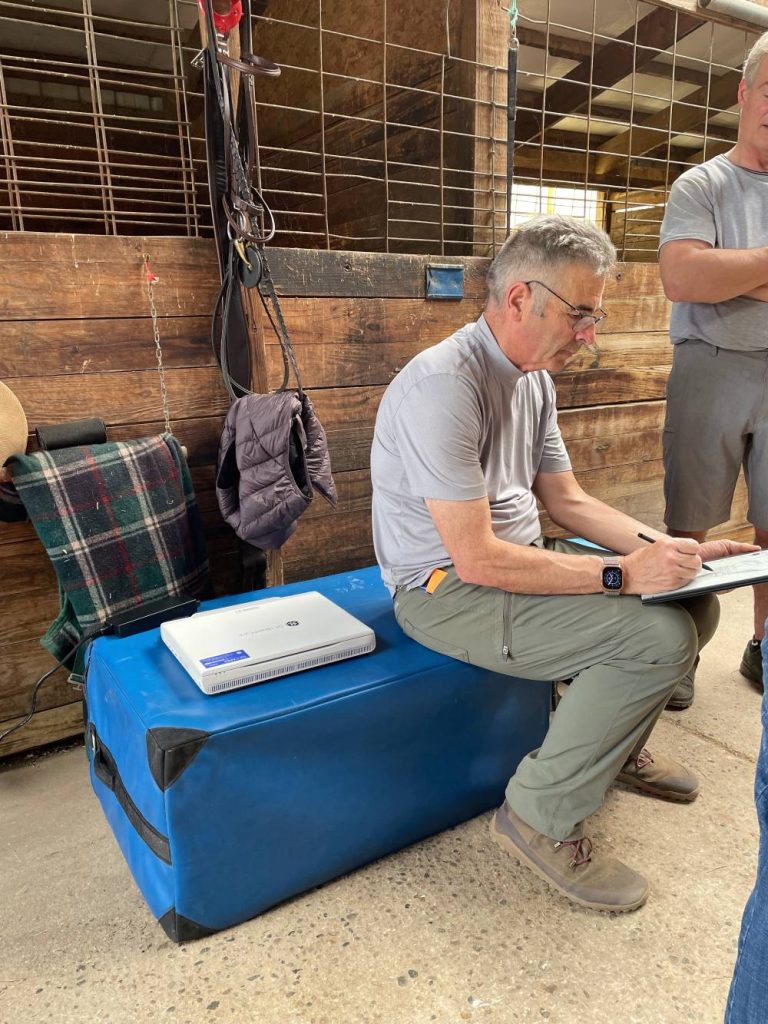
If you are a Michigan horse owner reaching out for the first time, here is what to know about our quality services and how we work.
We provide mobile equine veterinary services throughout Michigan, with our primary service area covering the northwest and northeast Detroit suburbs from our Davisburg base. Our ambulatory model brings advanced diagnostic equipment directly to your barn, removing the stress and cost of transporting your horse. We also travel to major equestrian venues and competition sites throughout the Midwest. Distance is rarely a barrier for emergency care situations and complex cases requiring specialized attention, and we coordinate with vet clinics in Michigan when ongoing general care needs to continue between our visits.
Our mobile practice brings hospital-quality field equipment directly to your horse, including digital radiography, ultrasound, gait analysis technology, and laboratory capabilities. This removes the need for transport while delivering the same diagnostic depth available at a referral animal hospital for most lameness and performance cases. When cases require procedures that need fixed facilities, including MRI, CT, or nuclear scintigraphy, we coordinate referral and pass along detailed case information to keep care consistent through the diagnostic and treatment process.
Your initial consultation starts with a detailed discussion of your horse’s history, performance concerns, and what you have already tried. Dr. Thaler conducts a thorough physical examination and observes your horse in motion. We recommend having your horse clean and ready for examination, with access to good footing for movement evaluation and a list of current medications. Most evaluations take two to three hours depending on complexity. You leave with findings explained directly and a written report in hand.
We operate as a specialty referral service and work closely with referring veterinarians to coordinate care. Your regular veterinarian handles your horse’s wellness exams, vaccinations, and routine veterinary care. We focus on complex lameness problems, performance issues, and advanced diagnostics that require board-certified sports medicine experience. We provide detailed reports and recommendations following every evaluation and remain available for consultation on ongoing cases.
Consider specialty consultation when your horse has performance decline, subtle lameness, or training difficulties that have not responded to routine treatment. Early intervention nearly always produces better outcomes than waiting. Horses with chronic or recurring problems, those requiring pre-purchase evaluation for competition use, and any animal where you are seeking a second opinion on a difficult case all benefit from a specialized assessment. If your regular veterinarian recommends referral or if general practice has reached the limits of what it can find, that is the right time to call.

©2026 Metamora Equine. Designed and Managed by ViziSites. Terms of Use. Website Accessibility.