Soundness You Can trust: From The Schooling Ring To The Grand Prix Ring
Schedule a performance-focused gait assessment

When a lameness case keeps coming back or a horse stops producing without a clear reason, our vet in Taylor, MI is the practice built to solve it.
Southeast Michigan’s competition horse community runs hard. Hunter/jumper barns throughout Wayne County, dressage riders heading to shows across the Midwest, eventers preparing for three-phase seasons. These are horses with real athletic demands and schedules that leave little room for a problem that does not get properly diagnosed. Dr. Thaler at Metamora Equine comes to your barn with board-certified sports medicine depth and state-of-the-art diagnostics to find what standard exams leave behind.

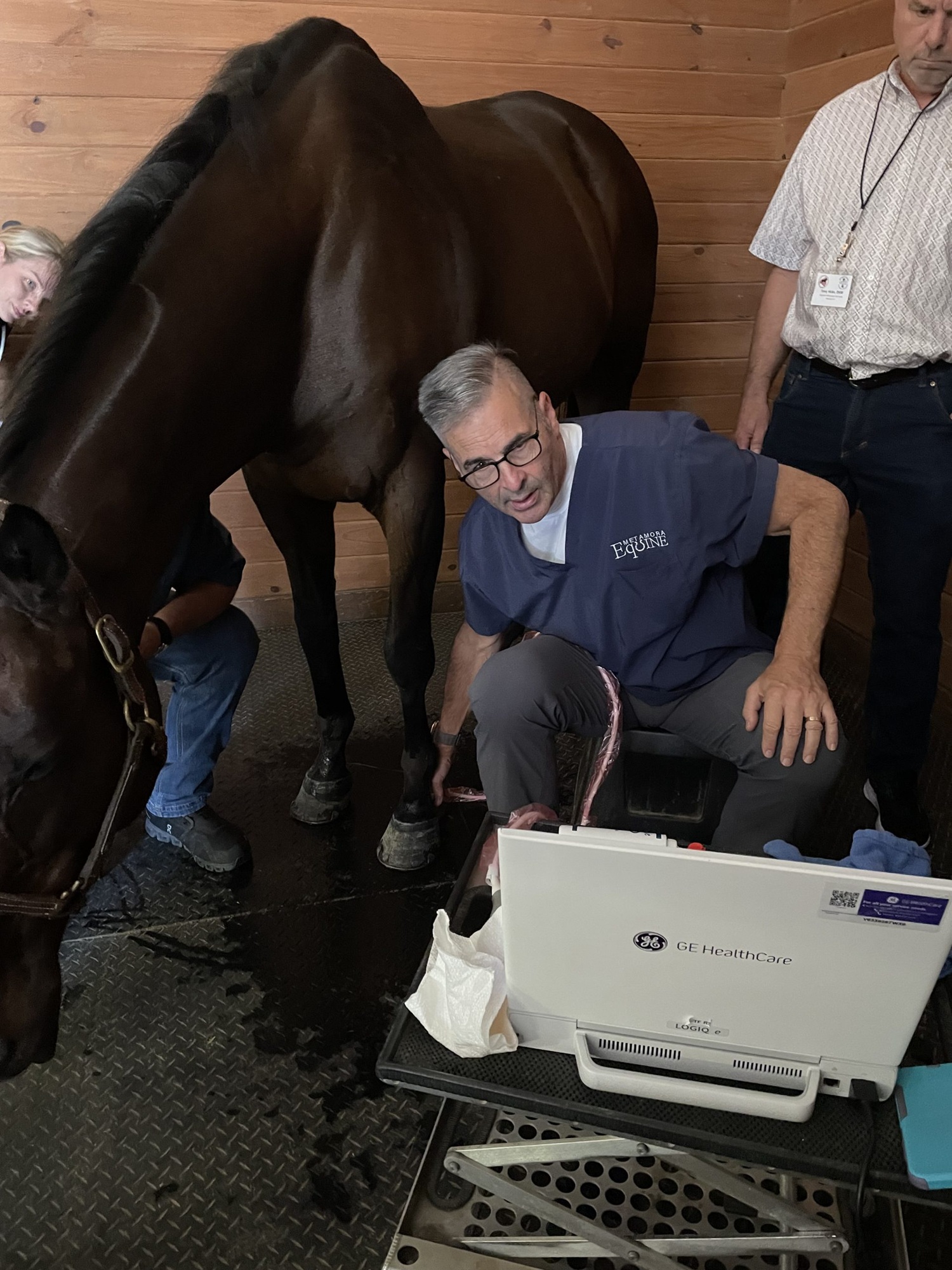
Metamora Equine delivers advanced, performance-focused veterinary care for competition horses, led by Dr. Thaler’s board-certified expertise in equine sports medicine. Every service supports accurate diagnosis, long-term athletic success, and thoughtful treatment.
We provide exceptional care for your equine athlete. Metamora Equine brings evidence-based medical solutions to the stall. We leverage technology and 40 years of experience to deliver health care to your horse.
Comprehensive care: working with your trainer, your farrier and you to provide the optimum performance management for your horse.
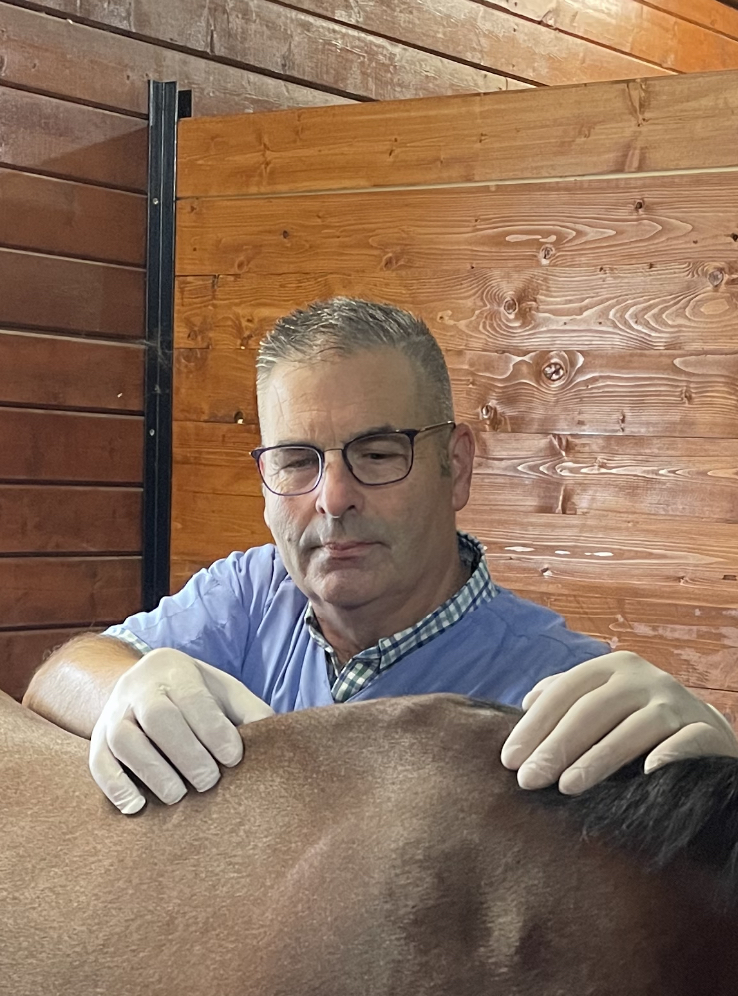
Dr. Thaler, VMD DACVSMR, made a deliberate choice to work entirely in the field rather than from a clinic. He comes to your barn because that is where the best diagnostic data lives: the horse in its actual environment, moving in its actual way, without the stress and altered movement that hauling to a facility creates. As a board-certified Diplomate of the American College of Veterinary Sports Medicine and Rehabilitation, a Fellow of the College of Animal Chiropractors, and a certified member of the International Society of Equine Locomotor Pathologists, he holds a combination of credentials built specifically around athletic horses and what they need. His background as a former adjunct professor at Michigan State University’s College of Veterinary Medicine means his methods stay current as the field develops. Four decades of veterinary experience, a strong academic foundation, and state of the art medical care to back it all up. That is what horses in Taylor, MI get when they need more than a routine visit.
Knowing something is wrong is not the same as knowing what is wrong or where. Dr. Thaler’s lameness evaluation uses objective motion data, on-site imaging, and targeted nerve blocks to trace discomfort back to its exact source, not just its approximate region.
Guessing at a lameness diagnosis costs time, money, and often makes things worse. Whether your horse has been visibly off for weeks or has just started moving differently on one rein, objective evaluation gives you real information to act on rather than a treatment plan built on the most likely explanation.
The clearest candidates are horses whose gait has changed in a way you can feel before you can see it: a shortened stride on one side, resistance into a corner, an unusual heaviness on the forehand without a clear cause. Horses that have gone through repeated treatments without lasting improvement belong here too, since treating the wrong location does not solve anything no matter how many times you try. Pre-purchase evaluations for horses heading into serious training are also appropriate, because identifying a problem before the sale is less costly than discovering it six months into a campaign.
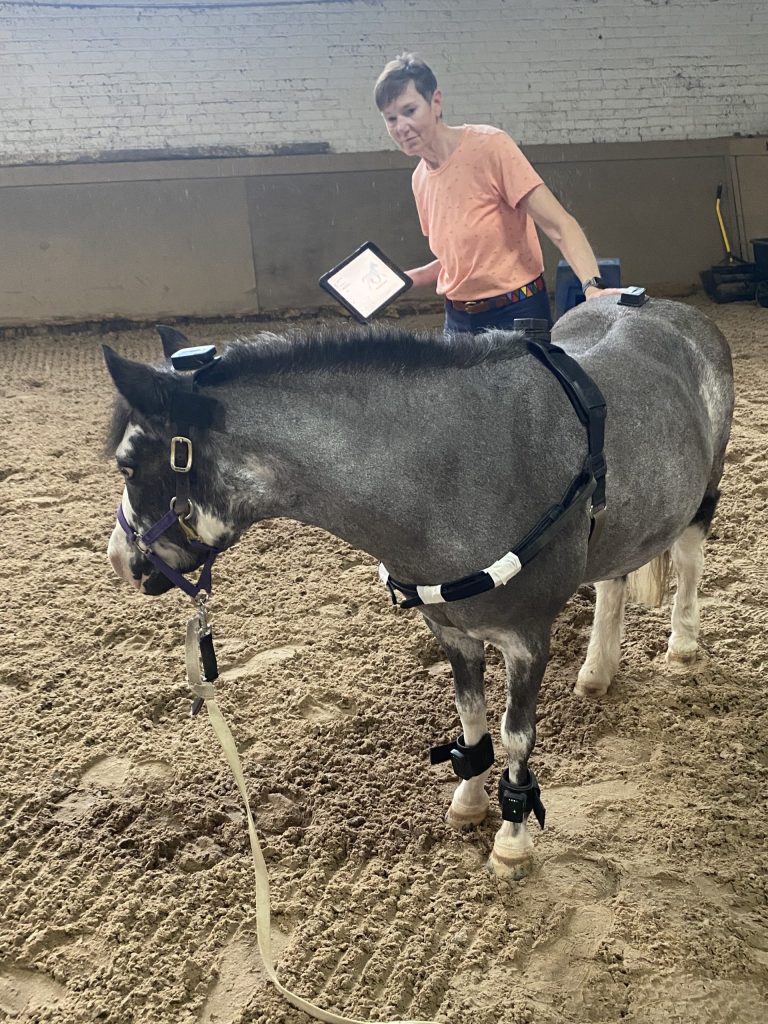
The evaluation follows a logical sequence rather than a checklist. We start with the Arioneo Vet Equisym System, which generates objective biomechanical data that gives us a map of where asymmetry exists before we do anything else. On-site digital X-rays and ultrasound then let us look at the structures flagged by the motion analysis without sending your horse anywhere. Targeted nerve blocks confirm or rule out specific pain sources, working through the relevant anatomy until we have a precise location rather than a general region. Everything gets documented with measurements and images so your trainer, farrier, and primary vet have something specific to act on.
Think of the evaluation as a foundation document for your horse’s care team. Your farrier now has confirmed loading data to work from rather than an impression. Your trainer knows specifically which demands create pain and which do not, so decisions about conditioning are based on anatomy rather than observation. Follow-up evaluations measure progress against the objective baseline, so improvement is tracked in actual numbers. When the case calls for referral for advanced treatment options or orthopedic procedures, the complete diagnostic picture goes with the horse.
Do not wait for a second opinion until a competition season has already gone badly. Call when you first notice a movement change, even if it seems manageable right now. Pre-season evaluation before increasing training load is one of the most cost-effective decisions in a horse’s competition career. Post-injury evaluation before returning to full work confirms readiness rather than assuming it. If your instinct says something is off, scheduling an evaluation is cheaper than the injury that develops when a small problem is managed around instead of resolved.
It is easy to assume that experienced eyes will catch what matters. A 2024 sport horse study tested that assumption directly by applying objective movement analysis to 123 high-performing competition horses and finding that “69% of the horses in this high-performing population displayed movement asymmetries” that could point to a painful condition, with every one of those horses considered sound by the people riding and training them. Seven in ten competition horses carrying an undetected movement problem. Instrumented evaluation finds what observation cannot, and in a discipline where the margins are tight, that difference has real consequences for results and for the horse’s long-term soundness.
The destination of untreated lameness, in most cases, is osteoarthritis. UC Davis Vet Medicine reports that OA accounts for more than 60% of equine lameness and “gets progressively worse with age,” a progression that has no natural stopping point once it starts. A horse compensating for pain in one area shifts load onto neighboring structures, which then begin their own cycle of damage. By the time the signs are obvious, the underlying damage is often already significant, the treatment timeline is long, and a full return to previous performance is not assured.
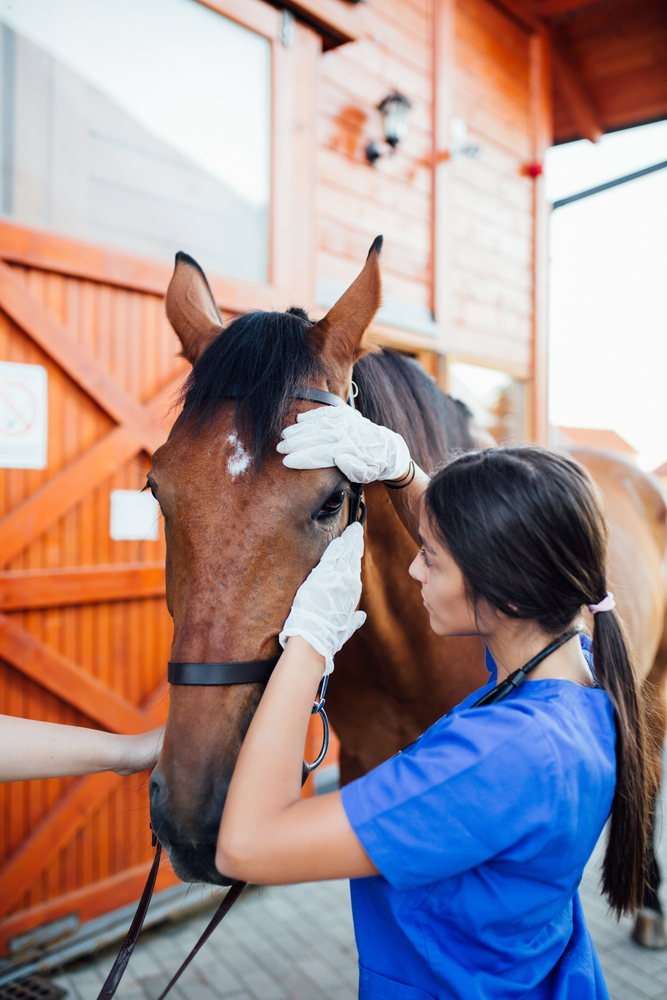

Horses do not choose to underperform. When a horse that used to produce stops producing, there is a reason, and most of the time, the reason is physical. Dr. Thaler’s performance assessment finds it, whether it is showing up in the horse’s movement or hiding somewhere a basic exam will not reach.
If your horse has the work ethic but not the results, a physical evaluation is the logical next step before adding more training. Poor performance assessment is built for the horse that is trying but limited, one where the attitude is not the issue but something else clearly is.
Building a competition career takes more than keeping a horse healthy enough to train. It takes tracking how the body responds to athletic demand over time and staying ahead of the changes that accumulate before they become problems. That is what sports medicine is for.
If your horse is treated as an athlete, its veterinary care should match that. Sports medicine is not reactive care with a different name. It is a structured approach to monitoring athletic horses throughout the demands of a competition season, so problems get addressed in the window when they are still small.
Any horse training consistently for competition has a use for sports medicine. The physical load of a hunter/jumper program, a dressage training scale, or a three-phase event season is cumulative, and the structures carrying that load need to be tracked rather than assumed sound. Horses stepping up to a more demanding competitive level, horses returning from injury, and young horses in their first full competition season all benefit from having a sports medicine program in place before problems emerge rather than after.
The program is built around your horse’s actual competition calendar rather than a generic schedule. Pre-season evaluation establishes a baseline to measure against. Spinal manipulative therapy maintains alignment and range of motion as training load increases. Regular movement monitoring tracks gait changes across training blocks so developing issues are caught before they cause lameness. Diagnostic anesthesia and on-site digital X-ray imaging are available when new areas of concern come up mid-season. The level of involvement adjusts as the season progresses so the support matches the demand.
Sports medicine provides a total health care foundation that sits in the middle of your horse’s care team rather than alongside it. When Dr. Thaler identifies something at a check-in, that finding goes to your trainer, farrier, and primary vet with the specificity needed to act on it. Data collected across a season builds into a record of how the horse responds to load, what structures need monitoring, and when recovery needs to take priority. When referral for advanced imaging or surgical consultation is needed, that handoff comes with complete documentation rather than a verbal summary.
The right time is before the season, not after something breaks. Pre-season evaluation sets the baseline. Check-ins during the competition season catch the kind of subtle changes that trainers notice but cannot name. After a season ends, assessment identifies what carried over and what needs to be addressed before training resumes. Horses returning from injury need sports medicine confirmation that their health needs are fully addressed before competition loads are put back on.
By the time something is visible enough to prompt a call to the vet, it has usually been developing for a while. A show jumping monitoring study found that tracking objective fitness indicators in competition horses helps determine whether the horse is coping with applied workloads and provides the foundation “to minimize exercise-associated injuries.” That is precisely the window sports medicine works in: the time between when a problem starts accumulating and when it shows up as something obvious. Staying in that window is what separates horses with long competition careers from horses that cycle in and out of recovery.
The injuries that most often derail careers are not first occurrences. They are re-injuries to structures that healed wrong after the initial episode. A tendon re-injury study found that fibrotic scarring from tendon injury drives “23%–67% of horses that experience re-injury of a tendon” within two years of the initial injury following conservative treatment alone. Rest and basic management return the horse to work, but the repaired tissue is not what it was, and the first serious demand on it confirms that. Specialized sports medicine manages the recovery well enough that re-injury is not the predictable outcome.
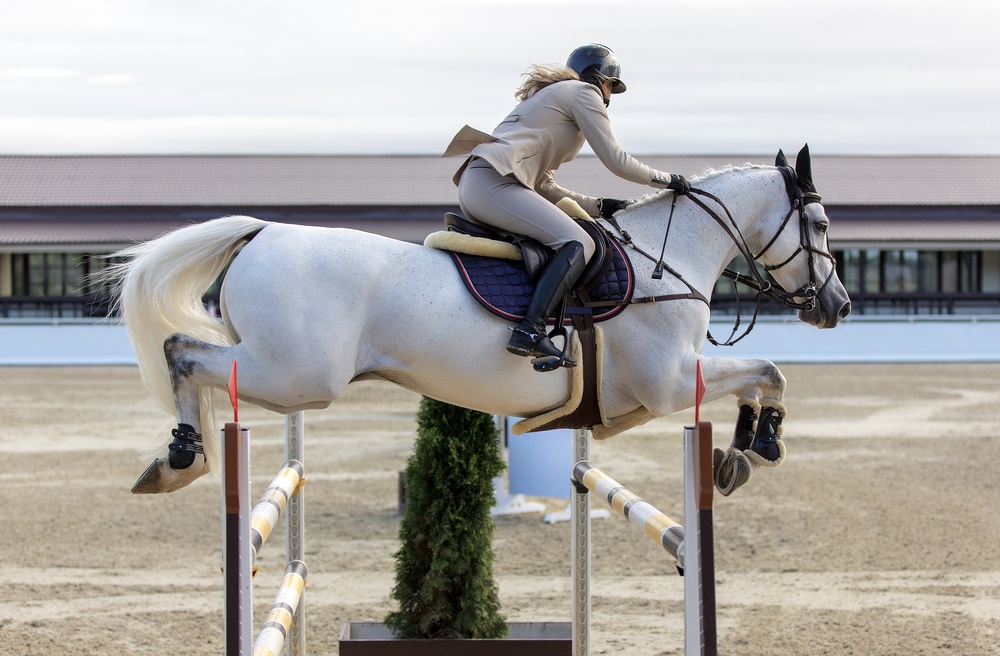
40+ years of experience. National reputation. Proven clinical and business leadership.



Metamora has really great imaging that they bring right to us. It allows them to follow every lead to fruition. No waiting and no guessing. They also take a very methodical approach to every exam. It’s a process, like building a puzzle, so using diagnostics and technology to collect data reveals another part of the puzzle.
Sarah Ash, Trainer, True Course Farm
Doctor Thaler is incredible at diagnostics. He has the tools, the training, and the experience to solve challenges that other vets really could not. Figuring out lameness can be very subjective. Dr. Thaler uses technology to look for answers and tell him things that the rider can’t, that the horse can’t.
Cindy Petherbridge, Trainer, Huntsover Farms
With Metamora, the horse comes first. They bring urgency and care to every visit. They’re good with the horses – even difficult ones – and then they take the time to talk to the owner or the rider.
The technology has always been the thing that impressed us. Doctor Thaler has the science that backs it up. He has the tools and the techniques, and he’s done the studies and read the latest news. When he makes a suggestion, there are facts behind it, not a guess. He gives you the best of all the options available for whatever we are dealing with.
Rhonda Wille, Owner
It’s easy for vets who see hundreds of horses to quickly turn to solutions that have worked for them before. In contrast, Dr. Thaler is always gaining new knowledge. He has the most modern and best diagnostic equipment, and so he suggests new perspectives and ideas. That’s important to being successful in diagnosing injuries and problems.
For clients serious about performance, Metamora is my go-to. Dr. Thaler is the top sports veterinarian and a partner and resource for diagnosing lameness and other problems, as well as suggesting therapeutic solutions.
Garth Short, Owner, Horseshoeing Incorporated
The communication from Metamora is key. I am always contacting them first with my questions. They’re ability to answer the call and provide service to clients is unmatched, even if that means going the extra mile to accommodate.
Leah Smaller, Professional Rider and Trainer
Doctor Thaler has a problem-solving mindset. There’s no one better at finding an issue. He uses technology and experience to understand the issue.
Jaafar Reza, Trainer, Gross Point Equestrian
There are many different therapeutic applications that promote healing. Dr. Thaler comes in with the science. He’ll study the X-rays and do the diagnostics, then I’ll do the farrier work. We’ve brought horses back from lameness and saved horses that otherwise would be done. He’s 100% onboard to get the horse through it.
This practice defines excellence
Dana Wille, Head Trainer, Equine Odyssey
Sometimes I walk into a barn and know Metamora’s been there because there is a picture drawn of a horse’s leg showing where this injury was. Dr. Thaler is great at explaining complex things very simply.

Our vet in Taylor, MI, with board-certified equine sports medicine depth means Southeast Michigan horse owners no longer have to compromise. Dr. Thaler comes to your barn with everything required to do the evaluation properly and the board-certified depth to handle what he finds. Contact us at 248.310.5568 to get on the schedule and find out exactly where your horse stands.
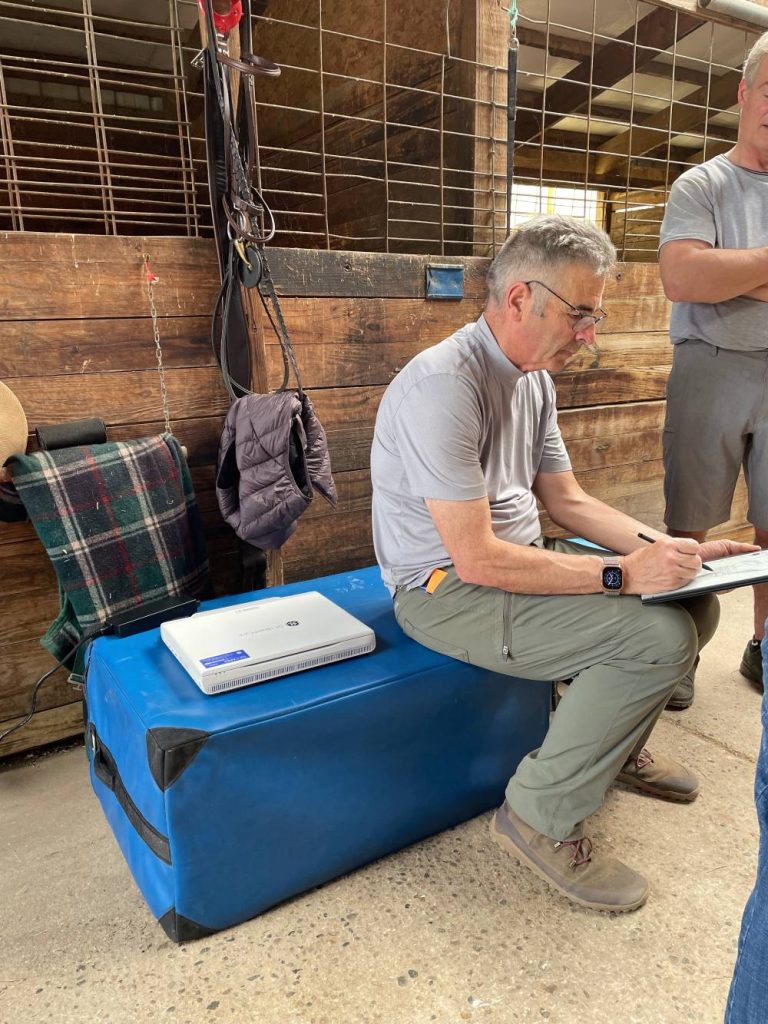
If you are considering Metamora Equine for the first time, here is what to know before reaching out.
Bonnie Thaler handles scheduling and is the right first call. Reach out by phone or through the appointment request form on the website. Having a brief summary of your horse’s situation ready helps Bonnie make sure Dr. Thaler arrives with the right equipment and enough time set aside. The schedule fills up, so whether your horse has routine or emergency medical care needs, reaching out early gives the best chance of getting a timely appointment.
Dr. Thaler will want your horse’s full history before he starts: what you have noticed, what has been tried, and what you are hoping to understand. The evaluation is built around that conversation and what he finds as he goes, not a predetermined checklist. Most first visits run two to four hours depending on the case. You will leave with a clear explanation of findings and a specific plan, not a list of things to think about.
Yes, entirely. Unlike a traditional animal hospital or veterinary clinic with exam rooms, there is no trailering and no clinical setting. Dr. Thaler brings the Arioneo Vet Equisym gait analysis system, diagnostic imaging, nerve block equipment, and everything else the visit requires directly to your facility. The horse stays in its own environment, which also produces better diagnostic data since the horse moves naturally rather than under the stress of a new location.
The practice is based in Davisburg, Michigan and covers the Southeast Michigan area and surrounding Wayne County communities, along with the Northwest and Northeast Detroit suburbs. The practice also travels regularly to competition venues throughout the Midwest and has clients in Ohio and North and South Carolina. Contact us to check availability in your specific location.
Keep your horse on its normal routine going into the appointment. No changes to turnout, feed, or medication unless Dr. Thaler has specifically asked for something different. Have your horse clean and accessible in an area where it can move freely at the walk and trot. Bring any prior vet records, diagnostic images, or competition history that might be relevant. Leave room near the barn for vehicle parking and equipment setup.

©2026 Metamora Equine. Designed and Managed by ViziSites. Terms of Use. Website Accessibility.